The Vital Farms Scramble
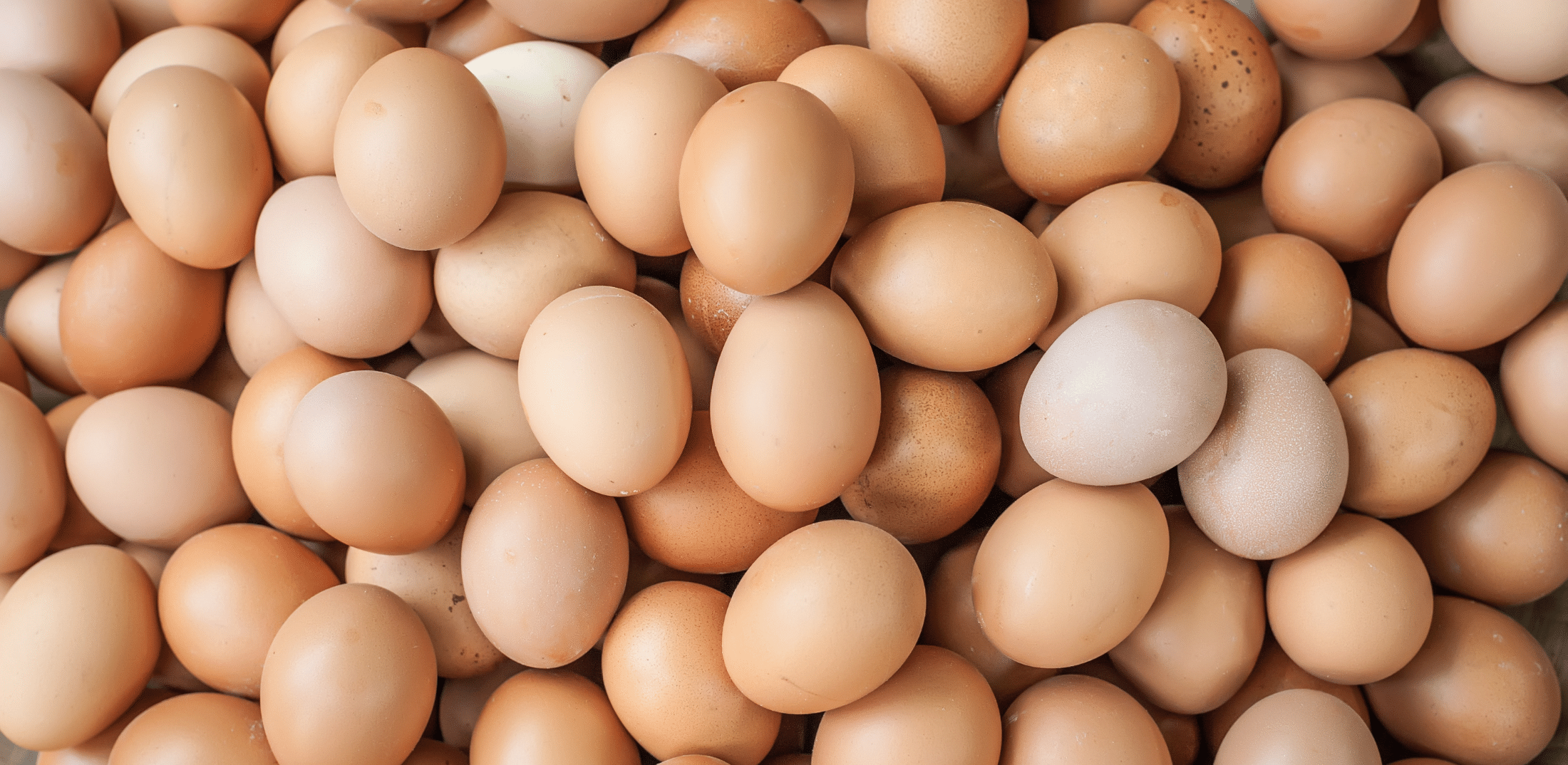
Social media was in a tizzy last month over humane egg darling, Vital Farms, for alleged greenwashing and humanewashing. It started when a study from Nourish Food Club (in collaboration with Michigan State University) found that the eggs had a high concentration (22.5 percent) of linoleic acid, an Omega-6 fatty acid. This percentage is higher than a tablespoon of canola oil. The exposé suggests the hens were fed with conventional livestock feed consisting of corn and soy.
Vital Farms also reportedly adds marigold or paprika to the feed to enrich the color of the egg yolks, which consumers may interpret as indicating higher-quality or more nutritious eggs.
Vital Farms works with nearly 600 farms across the country, but primarily in the “Pasture Belt,” which includes Arkansas, Illinois, Indiana, Kansas, Kentucky, Missouri, Ohio, Oklahoma, and Tennessee. Their farmers grow under contract and require a “considerable financial commitment” to build barns up to Vital Farms’ standards. Their website claims the barns can cost up to $1.2 million to build. Each barn houses 10,000 to 20,000 birds at once. As of November 2025, they had around 9 million hens under contract.
The Actual Vital Farms: Behind the Veil of Contract Farming
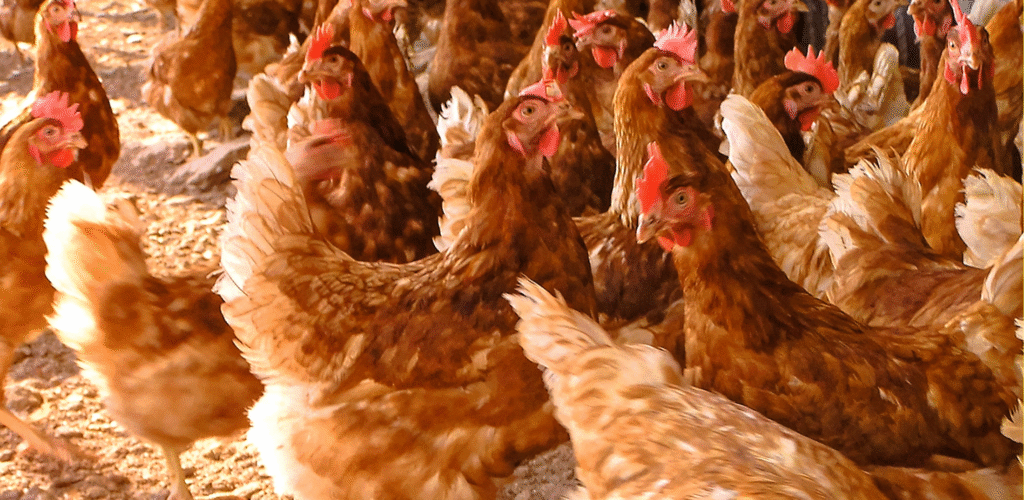
Though the company claims pride in working with so many family-owned farms, most of that work is done on farms under contract. Contract farming can come with its own host of problems, namely trapping farmers in a debt cycle that prevents them from exiting the industry.
That sentiment, shared by many of the farmers Transfarmation has worked with directly, was shared online in a popular online forum. One Ohio Redditor, who claims to be a long-time contract grower for Vital Farms, wrote, “Many days I wonder why I ever started this.”
“I do 2 barns with other people. The numbers look good on paper but it’s year 7 and 90 percent of the money goes right back into the barns due to new requirements for the birds. Insurance is 1500 a month. After 2 years things start breaking down. I do all my own repairs it’s still expensive.” [sic]
—dpme4567, Reddit User
Two years later, the same user responded to another comment with the claim, “You get stuck with a 2 million dollar loan so how are you just going to walk away? ... Even with the 2 million dollar investment I cannot take a 30k salary out for myself yet.” [sic]
Vital Farms is a billion-dollar company. They went public in 2020, and major firms such as BlackRock, The Vanguard Group, and Amazon hold significant stakes. They are projecting to double their value, surpassing $2 billion by 2030.
So… Is Vital Farms Humanewashing?
Humanewashing is a deceptive marketing tactic where companies use labels, flowery language, and positive imagery to trick consumers into thinking they’re buying products from ethically treated animals. Vital Farms has been accused of this before; a class-action lawsuit alleging unethical practices was filed back in 2021. The company was accused of humanewashing to deceive customers. However, the claims were dropped in January 2025.
Vital Farms emphasizes transparency about their practices. Their website answers several animal welfare-oriented questions, including ones about standard industry practices like beak trimming, chick culling, and euthanasia. They also provide information about being a Certified Humane® company, stating they adhere to standards set by a third-party animal welfare organization.
Vital Farms claims, “Our birds have always had year-round access to pastures with at least 108 square feet of pasture per bird.” The keyword here is access. It would be impossible to guarantee that every hen out of 10 or 20,000 will ever actually make it outside. Actually, by definition, their facilities meet the criteria for a Condensed Animal Feeding Operation (CAFO), or a factory farm.
A Vital Technicality
The USDA considers a facility that houses 9,000 to 29,999 hens a “Medium CAFO.” A facility with more than 30,000 hens is considered a “Large CAFO.” Considering each Vital Farms barn houses 10,000 to 20,000 hens apiece, any of their contracted farms with at least one barn is considered a factory farm.
Vital Farms offers 360° livestream feeds from contracted farms on their website. While the view of hens foraging in the foreground certainly makes for an idyllic view, industrial-scale barns are typically visible in the background.
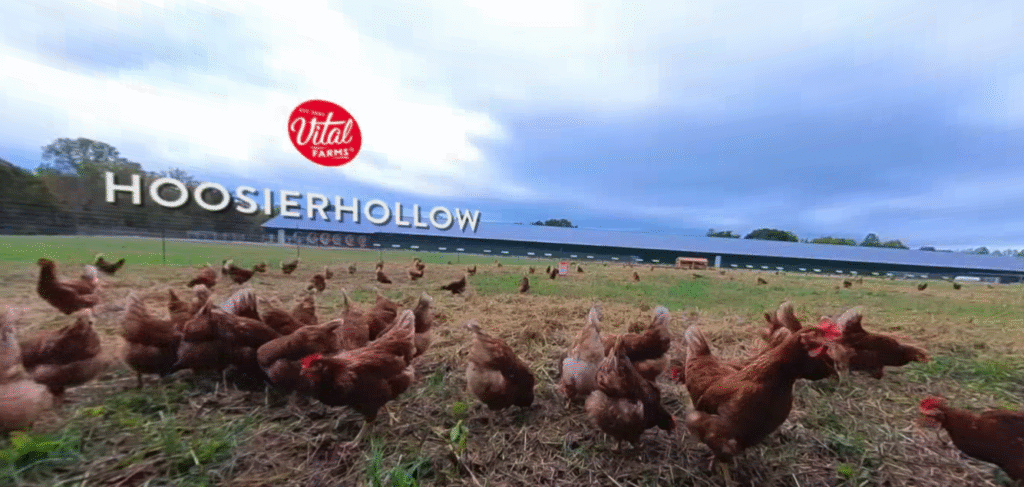
Because transparency is such a central part of the Vital Farms culture, it’s unlikely that they are purposely trying to deceive consumers. However, the average customer is unlikely to scour their FAQ page, watch farm livestreams, or understand the difference between the many feel-good, humane labels lining the shelves of a standard grocery store.
“When brands bury details in fine print while letting imagery do the talking, consumers tend to feel slighted when such details are brought to the light.”
—Kelsey Kryger, Health and Fitness Writer, Men's Journal
And consumers do seem bewildered and upset, taking to social media to express outrage and even call for boycotts. One user alleged, “The thing that really bothered me was learning that brands like Vital Farms feed marigolds to their chickens to make the yolks a [richer] orange color. Maybe they've been transparent, but customers are also becoming educated and now if I am able to find (and afford) better quality I will.” Another claimed, “Vital Farms is cooked,” and many others allegedly vowed to buy other brands in the future.
Flocking to Rural Communities: Vital Farms Expansion
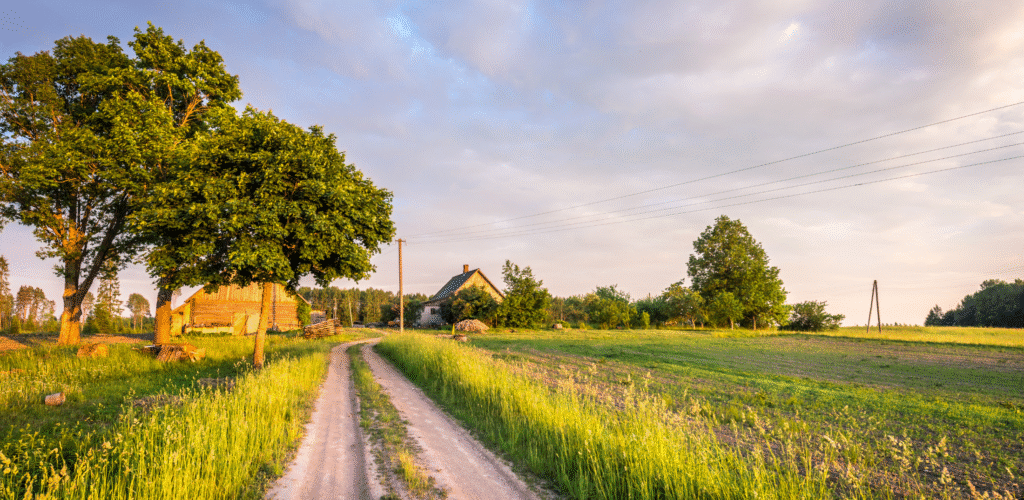
To achieve its goal of doubling revenue by 2030, Vital Farms is expanding. They are vertically integrating by opening additional egg-washing and packaging facilities, which will increase their capacity. They are signing contracts with more farms, and they are launching “Accelerator Farms,” or farms that will support the company’s research on sustainable farming practices.
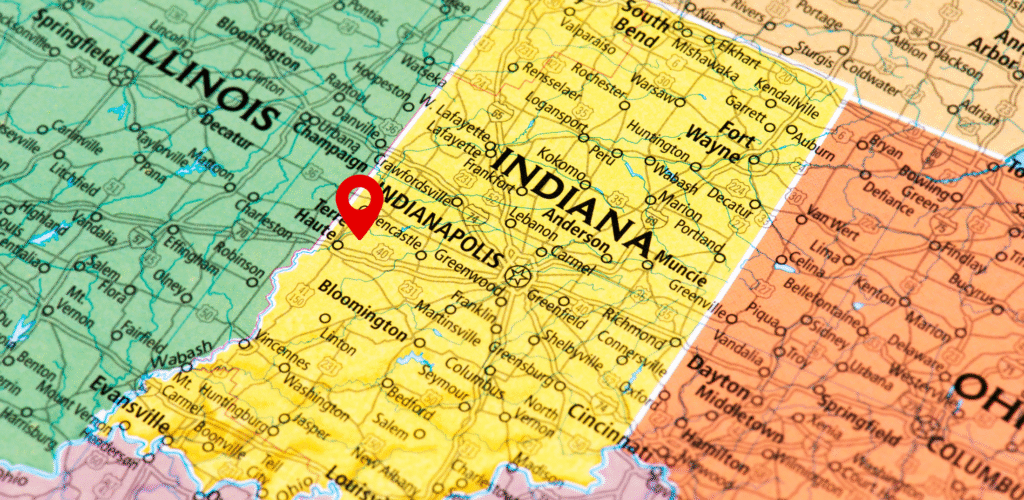
The Accelerator Farms will operate in Indiana and Kentucky. “They’re our playground for testing bold ideas that we could eventually scale across all our farms,” Vital Farms wrote in an update in July 2025. However, neighboring local communities gave a fair amount of pushback.
Residents of Ripley County, Indiana, launched a campaign and fundraiser to prevent the construction of a 20,000 hen barn near Otter Creek. The primary concerns in their official petition were environmental in nature. Hoosiers sought to defend local waterways, clean air, and their community feel. The campaign called Vital Farms a “critical threat” to their community. Residents also created a Facebook group, “Save Otter Creek Township, Ripley County” where they aired their grievances and organized efforts.
"Save Otter Creek"
Certainly, some worry is warranted. The animal-industrial complex produces twice as much waste as America’s toilets. Overall, it amounts to nearly a trillion pounds. Unlike human waste, animal waste isn’t treated before it’s released into the environment. Much of it ends up in our rivers, lakes, and estuaries.
Other concerns surrounded the distinction between contract farming for big corporations and small-scale farms. “They claim to work with ‘small family farms,’ but in reality, their model is corporate-controlled contract farming, where independent farmers have little say over conditions, pricing, or long-term sustainability,” wrote Zach Menchhofer, treasurer of the “Save Otter Creek Township” group. Other residents also commented on the importance of their rich agricultural heritage, which focuses on small-scale, family-owned operations.
“As large corporate (Vital Farms) egg producers move into our region, local farms like mine risk being pushed out. Supporting family farms keeps food dollars local and ensures transparency and accountability in animal care.”
—Barry Spencer, Bluestone Hatchery in Lewisport, KY, in the Facebook group
Vital Farms ultimately pulled their application in Ripley County, but Otter Creek is just one township affected by corporate expansion. In January 2026, amidst another proposed Accelerator Farm, similar arguments were brought to the Ohio County, Kentucky Fiscal Board Meeting. Roger Carter, a resident, stated, “[Vital Farms’ property has got] about 118 acres and they got room probably for two chicken houses. That would be 40,000 chickens. I mean, I can’t imagine 40,000 chickens.” Mr. Carter opposes the Vital Farms development because of potential air and water pollution and property devaluation.
Though research on sustainable farming practices is valuable, corporate encroachment upon rural communities is not the answer. The greatest and most urgent impact on our food system will not come from boardrooms. Real change starts with us.
Building a Better Food System

Local and regional food systems are not only capable of feeding their communities—they excel at it. With shorter supply chains and more flexibility, they do not face the difficulties many global distributors face. We must break free from the grip of corporate control. We need policies that support a free, competitive market of small independent producers.
Even a company like Vital Farms, a more conscious alternative to industrial giants, operates at an industrial scale. Their contract system can trap farms by keeping them in a debt cycle and their expansion incited community-wide environmental protest.
The Transfarmation Project® is proud to offer a real alternative. We empower farmers looking to escape corporate control and transition away from the animal-industrial complex. Farm transitions not only benefit farmers but also help communities, the planet, and animals. The time to invest in a free, competitive market of truly independent producers is now.
*Included photos are stock images from typical farms, etc., except where otherwise noted.