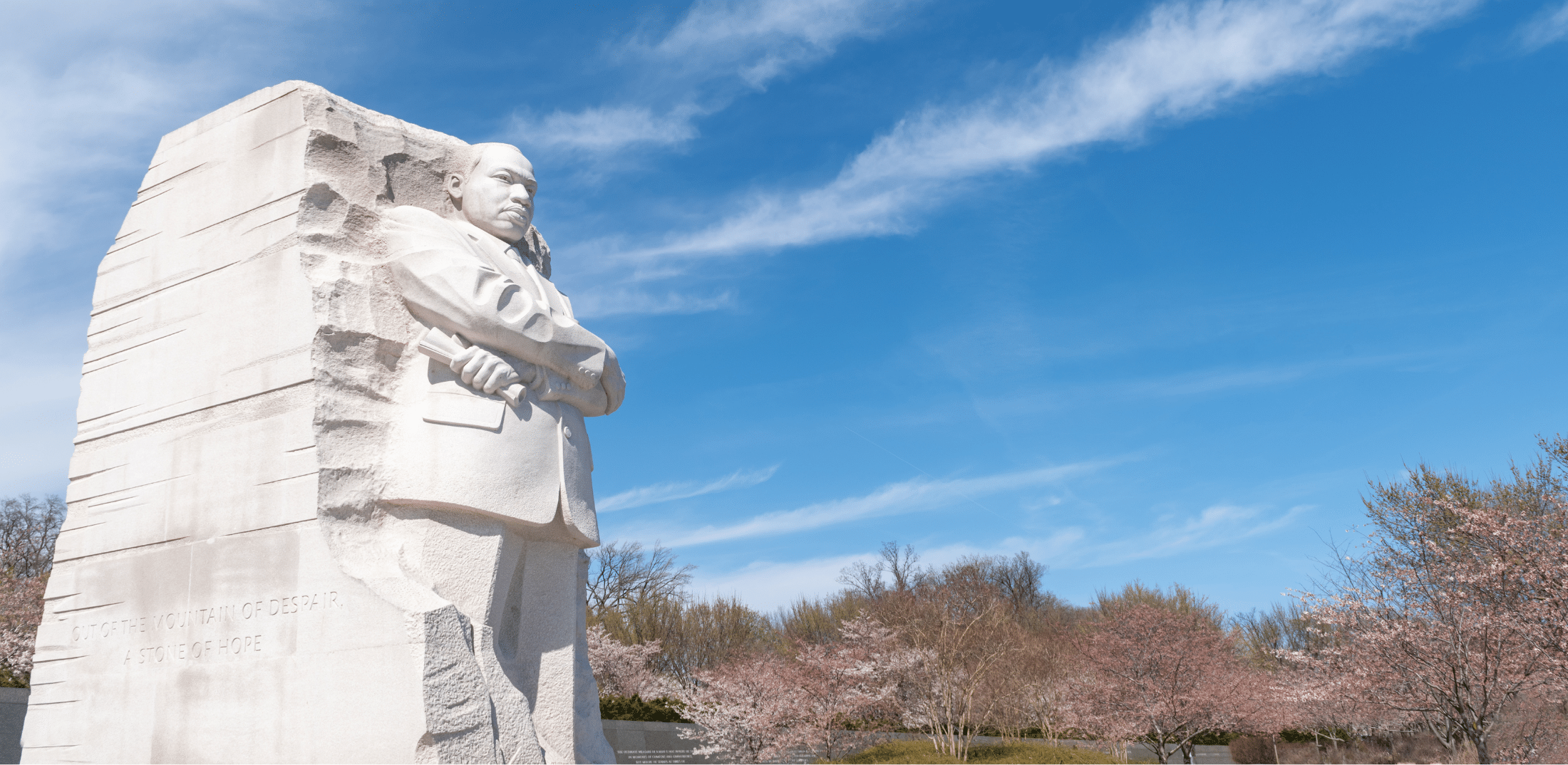
The Fierce Urgency of Now: Leading With Responsibility, Inspired by Dr. Martin Luther King Jr.
Why urgency and courage matter in speaking up for a better food system
Dr. Martin Luther King Jr. is often remembered for his dreams. What guides me most, however, is his insistence on responsibility, courage and action.
As a communicator, my responsibility is not to soften injustice or make it easier to accept. It is to make it harder to ignore.
That belief shapes how I approach my work as a Black woman and a senior communications leader with The Transfarmation Project®. It informs the decisions I make about what stories we tell, how directly we tell them and when silence is not an option.
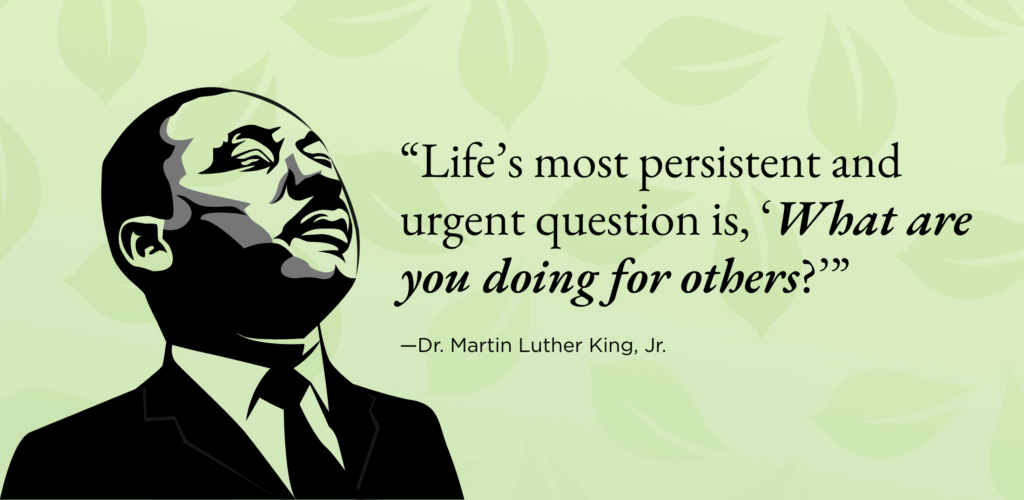
That question sits at the center of our advocacy work. Communications is not just about visibility or engagement. It is about whether our work moves people closer to justice or allows harm to remain hidden and normalized.
The inequities in our food system are many. From food apartheid to the long history of discriminatory practices that pushed Black farmers off their land, to the placement of concentrated animal feeding operations (CAFOs) near Black and other marginalized communities, the harms are not evenly distributed. Add to that the treatment of animals in factory farms, and it is clear that industrial animal agriculture is in urgent need of change. Much of this suffering is invisible by design. This reality creates an obligation to speak clearly and honestly, even when it is uncomfortable or controversial.
Dr. King understood that injustice does not exist in isolation.
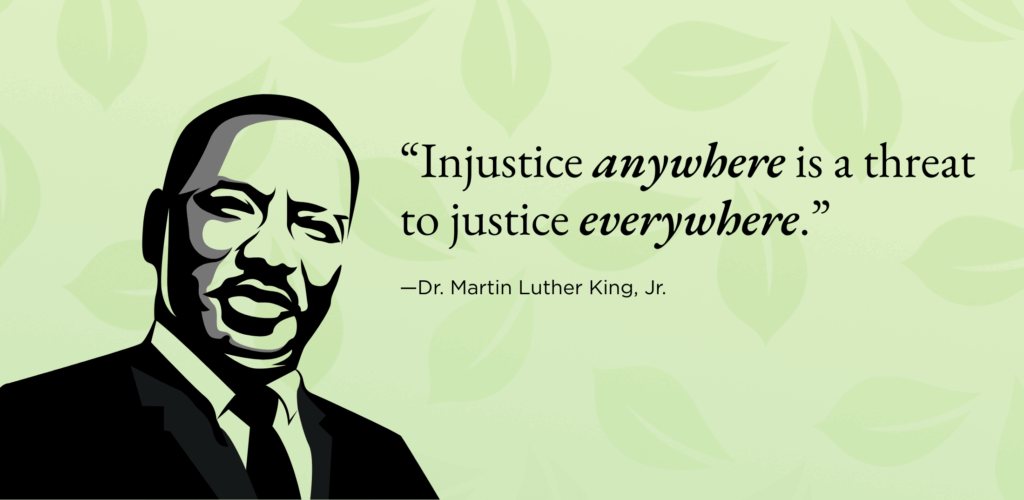
Animal welfare is often treated as separate from other justice issues, something optional or secondary. But systems that normalize harm, silence and profit over life are connected. Ignoring one form of injustice makes it easier to tolerate another.
Dr. King also warned against delay when lives are at stake.
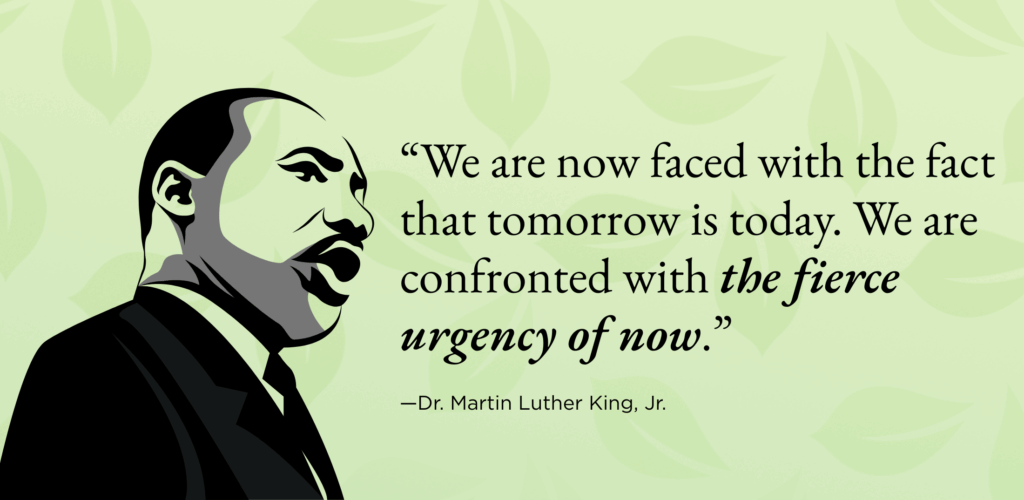
In advocacy work, waiting is often framed as a strategy. We wait for the right moment, the right audience, the right conditions. But harm is not paused while we wait. Urgency is not recklessness. It is recognition of what is happening right now.
There are moments when silence feels easier. It can look like neutrality or restraint. It can look like choosing not to push too hard.
But Dr. King was clear.
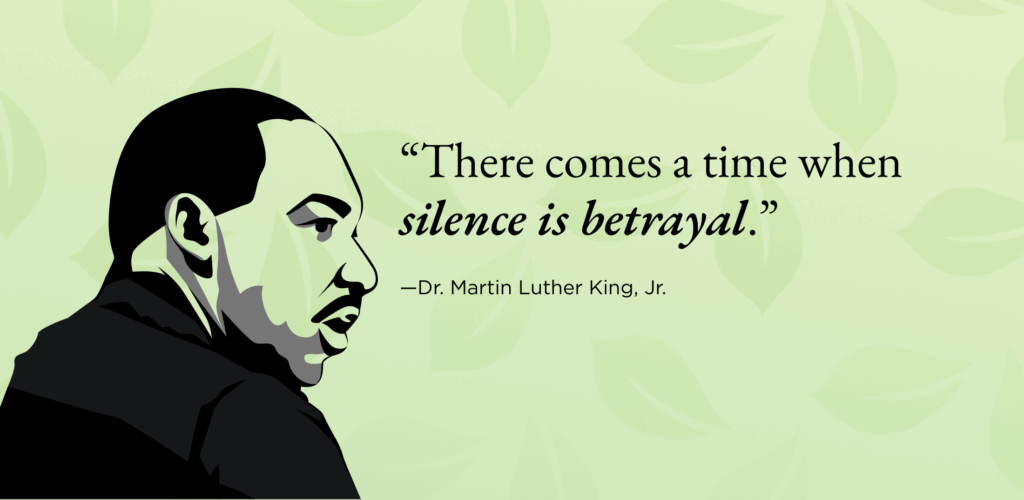
In communications, silence is never neutral. Choosing not to speak can protect factory farms that profit from suffering and allow cruelty to continue without public scrutiny. For me, this quote is a reminder that silence is a decision, and one that often comes at the expense of animals.
At Transfarmation™, power does not come from force or fear. It comes from compassion paired with accountability.

Love, in this work, is not passive. It demands truth-telling. It demands persistence. It demands that we challenge industries, food systems and narratives built on exploitation.
Leadership is tested not in moments of ease, but in moments of resistance.
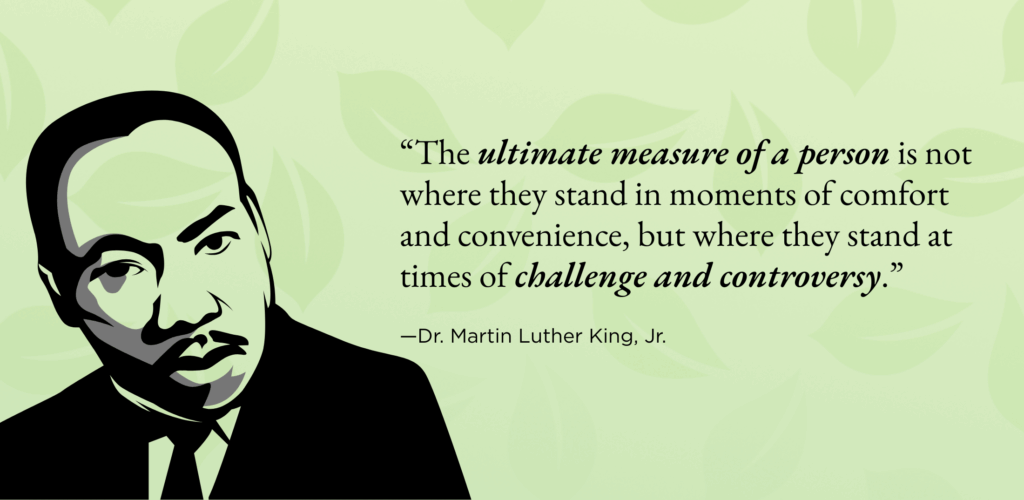
As a communicator, my role is not to make injustice more palatable. It is to ensure it cannot be ignored.
Dr. King taught us that progress is driven by people willing to speak, act and stand firm, even when it comes at a cost. I strive to honor that legacy through the work I do and the stories I help bring to light.
The question remains as urgent as ever: What are we doing for others today?