How the New Food Pyramid Has Big Ag Drooling
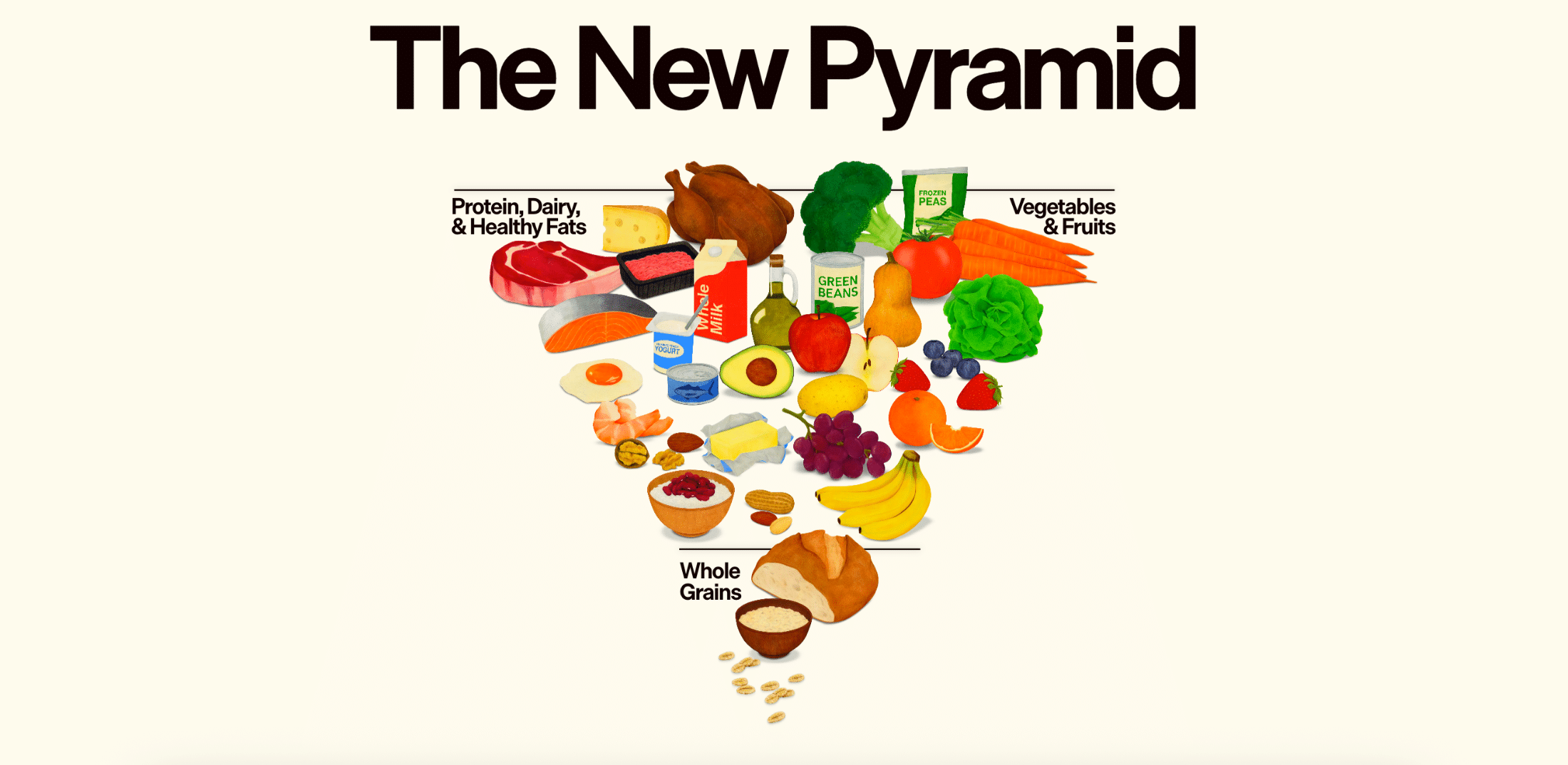
Last week, the United States Department of Agriculture and the Department of Health and Human Services (HHS) revealed their new dietary guidelines. The “new food pyramid” tells us simply, “Eat Real Food.” It prioritizes protein, dairy, and healthy fats along with vegetables and fruits. It denounces added sugars and ultraprocessed foods.
Overall, the changes are significant. For the past 30 years, the United States' dietary guidance has emphasized whole grains and carbohydrates. Today, those foods appear only in the smallest tier of the pyramid, with proteins and vegetables taking center stage.
Some have hailed these recommendations as a breakthrough. Indeed, an emphasis on whole, healthy foods is inarguably positive. However, the big picture leaves a bad taste in our mouth. For our food system to function well enough to meet these needs, there is much more to consider than just “eating real food.”
What The New Food Pyramid Got Right
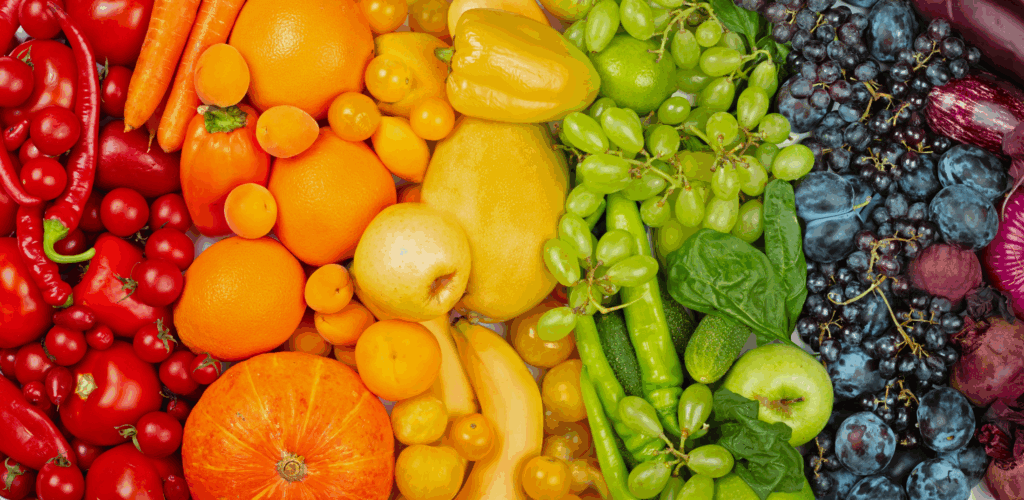
The new food pyramid advises Americans to “eat a wide variety of whole, colorful, nutrient-dense vegetables and fruits in their original form, prioritizing freshness and minimal processing.” Transfarmation™ entirely agrees with this. Fruits and vegetables are absolutely vital for every type of diet.
As part of its announcement, the HHS posted on social media that “we are realigning our food system to support American farmers, ranchers, and companies that grow and produce real food.” At The Transfarmation Project®, we recognize the immense changes needed in our food system. We are happy to hear that a realignment is a priority. However, the pyramid’s strong emphasis on animal-based proteins feels less like a guide to wellness and more like a monument to the corporate power that sustains a fundamentally corrupt food system.
So What’s the Problem?
The hallmark of today’s food system is factory farming, or confined animal feeding operations (CAFOs). About 99% of all livestock comes from these farms. While there are numerous health and welfare concerns associated with this type of farming, a significant consolidation problem also needs to be addressed.
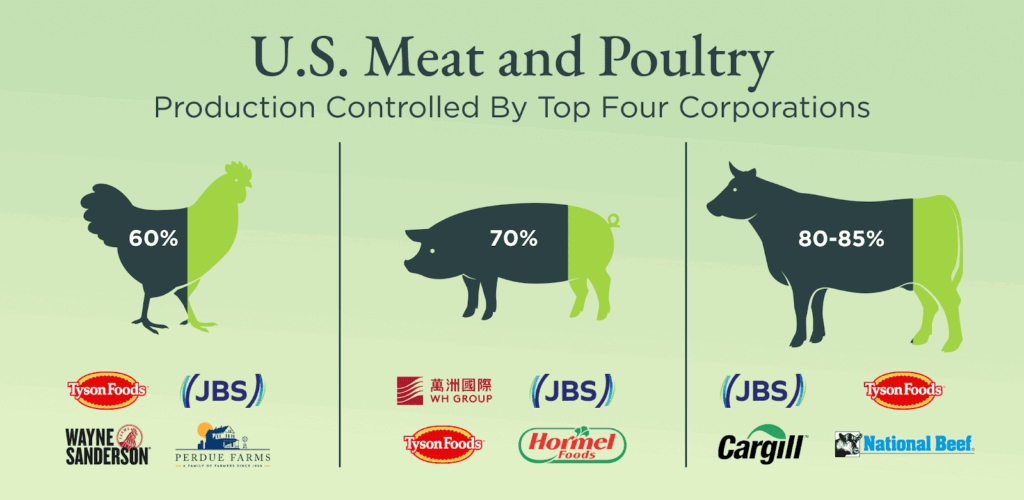
Just four companies control 80% of the beef industry, 70% of the pork industry, and 60% of the chicken industry. These megaconglomerates own dozens of brand names worldwide, from Pilgrim’s Pride and Smithfield to Jimmy Dean and more. The guidelines’ strong emphasis on including animal-based proteins in every meal must have these companies drooling!
As if this concentration of power wasn’t bad enough, some of the experts behind these recommendations also had ties to the beef and dairy industry. Comprised of people from various universities and hospitals, connections to dairy and meat groups like the National Cattlemen’s Beef Association, the National Pork Board, and Global Dairy Platform, and Danone’s subsidiary Nutricia have come to the surface.
These ties, coupled with lobbying power surpassing $5.5 million in the 2024 election cycle, are indicative of true rot at the core of the new food pyramid. But they also spend a lot of money on political contributions and shaping public opinion.
“The meat industry has so much money and power. It’s going to win in the darkness.”
—Austin Frerick, Anti-Trust Expert to Investigate Midwest
Despite this, HHS stated outright that ending corporate control of our food system is a primary goal. While this is a goal that Transfarmation would be excited to get behind, the recommended increase in meat consumption stands to benefit these major corporations, potentially at the expense of the very farmers and producers who grow our food.
The Roots of The New Food Pyramid: Food Not Feed
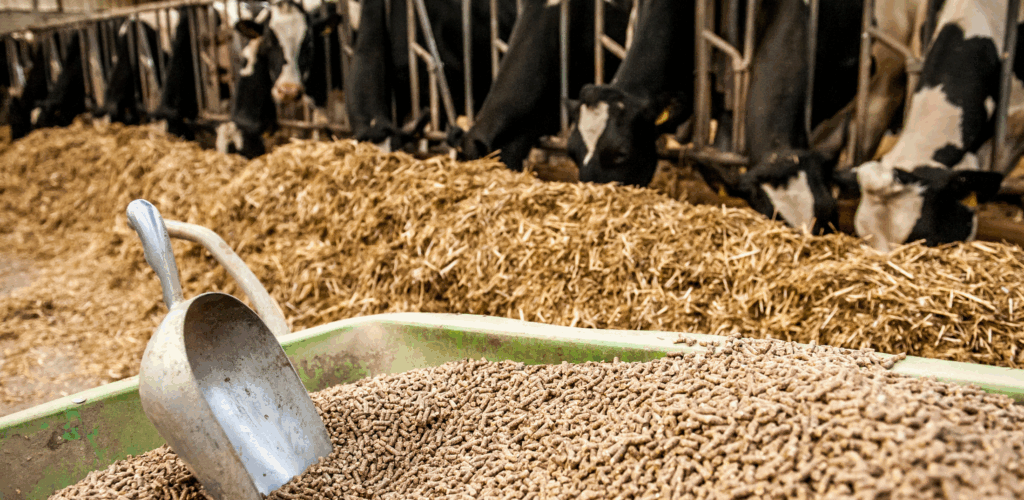
“Real” vegetables and fruits are also a significant pillar of the new dietary guidelines. However, support and subsidies for these crops remain shamefully low compared to the massive handouts given to the crops that feed the factory farm model. The result? The United States imports most of its essential fruits and vegetables.
Our nation’s agricultural focus has shifted toward “commodity” crops, such as soybeans and corn. These plants are primarily used for animal feed and to produce ethanol and cheap sugars, starches, and oils. That the USDA classifies fruits, vegetables, and legumes as “specialty crops” speaks volumes to how the agency views these crops. In fact, our status as an agricultural powerhouse has become highly debatable as we have operated at a trade deficit for five of the last seven years. Last year’s projection of a $47 billion deficit is worse than ever!
The policies that support Big Ag also help make locally grown, healthy produce unaffordable for too many families. A report by the New York Post found “it would cost about $175 for a single person’s weekly grocery bill buying from Whole Foods Market on Amazon — if they stick to the high-quality options. It would be around $164 if they buy from a brick-and-mortar grocery.”
Food justice is a critical part of food system reform, and guidelines alone are not enough, especially for those experiencing food apartheid. Food justice means fair, equitable access to healthy, culturally appropriate, and affordable food for all. It addresses systemic issues, from historical injustices to economic disparities, and aims to create a world where every person enjoys the fundamental right to nutritious and sustainable food.
Transfarmation: Building the Real Food Future
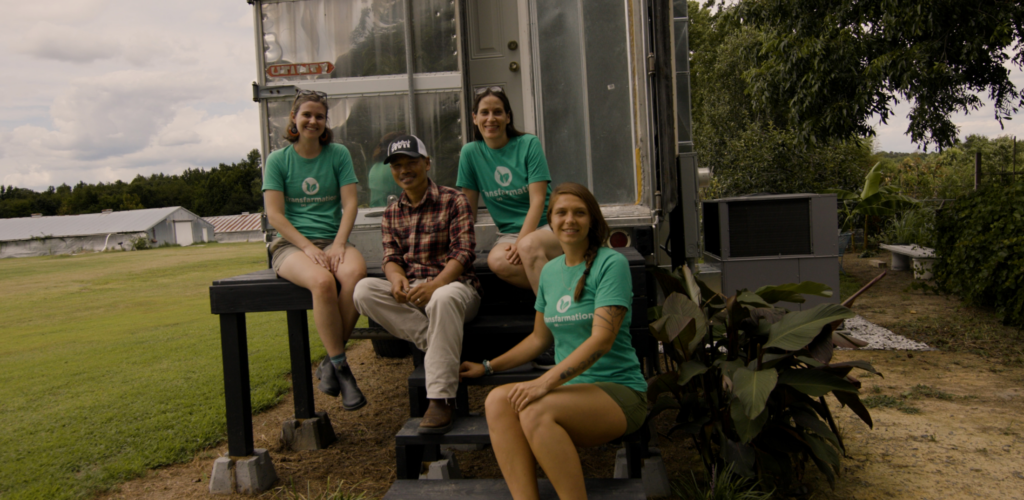
We don't need a new set of dietary guidelines skewed toward corporate profits; we need a new food system. The Transfarmation Project is making that system a reality by partnering with farmers to repurpose their infrastructure for growing plants.
Transfarmation works with farmers to design new, replicable agricultural models that are successful, profitable, sustainable, and compassionate. We are helping farmers exit factory farming and transition to high-value specialty crops, like specialty mushrooms and greenhouse vegetables. For example:
- The Faaborg Family, who once farmed pigs, converted their hog barn into a mushroom production hub, an endeavor they’ve named 1100 Farm. As Tanner Faaborg said, “It’s time to stop contributing to the problem and become part of the solution.”
- After losing his chicken contract, Tom Lim worked with Transfarmation to convert a poultry barn into a demonstration hub for growing vegetables and specialty mushrooms, finally allowing him to make a living from growing food for people.
There are economic and environmental victories. Locally owned and controlled farms contribute more to their rural economies. Growing specialty crops requires a fraction of the water used in animal agriculture (one pound of chicken meat takes over 10 times the water needed to produce one pound of strawberries), and transitions eliminate the massive pollution from animal waste.
Yet we cannot fully realize a food system overhaul while our government policy continues to prop up factory farming with outdated recommendations and massive subsidies.
We need your support to demand a policy pivot:
- Support Local, Small-Scale Farmers: Seek out farmers who grow specialty crops and produce "real food." Every purchase is a vote for a more just and sustainable food system.
- Advocate for Subsidies for Healthy Food: Call on your elected officials to shift government subsidies away from destructive commodity crops and toward local, specialty crop farming. We must make healthy, environmentally sound food the affordable choice for every family.
Farmers are hungry for a more just and sustainable food system. With collective power, we can make this system a reality.