Cheap Meat, High Cost: The Rise of Industrial Chicken
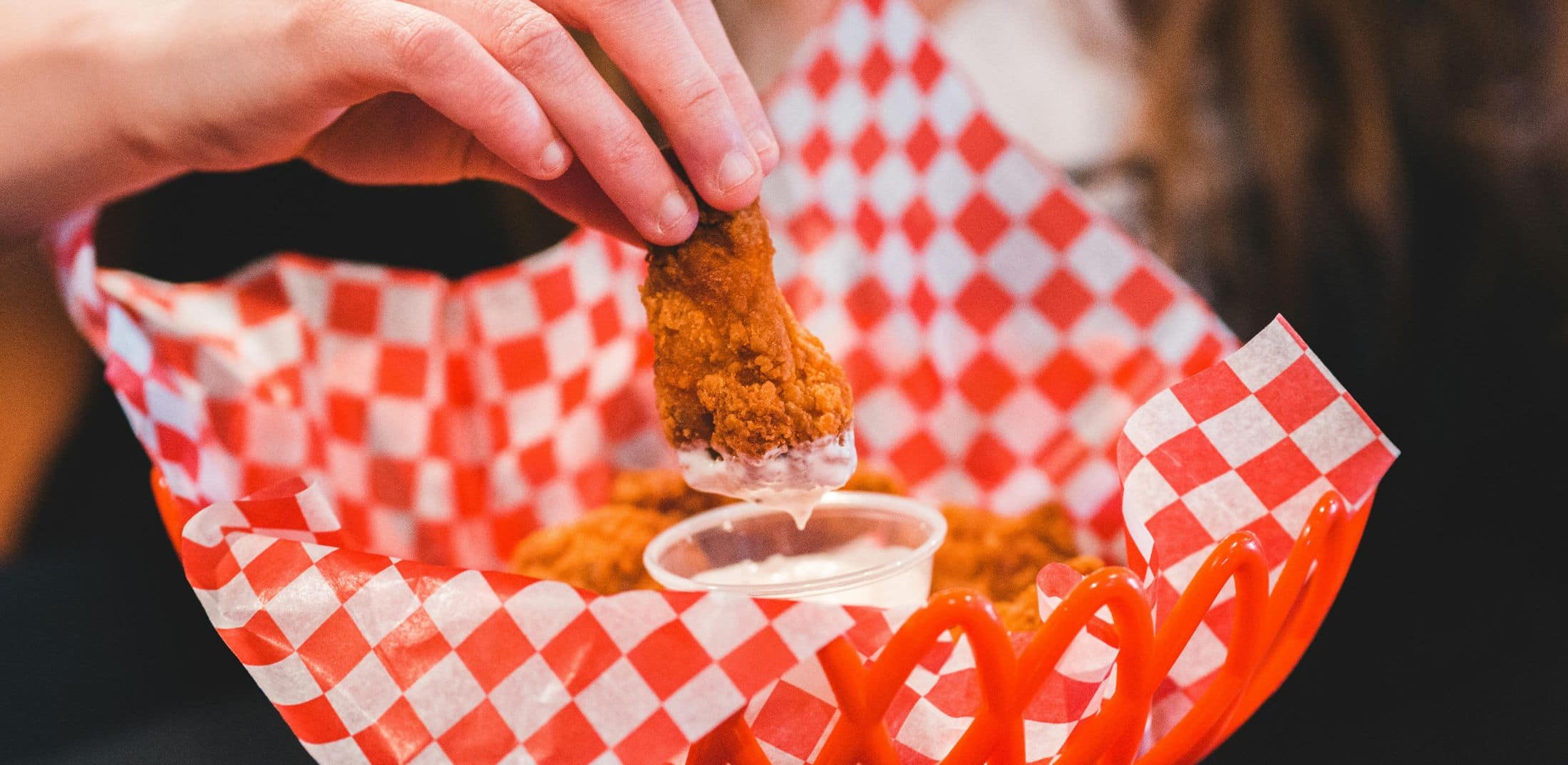
If you have walked past the deli counter at a supermarket lately, you’ve likely gotten a whiff of a rotisserie chicken. After all, about 900 million are sold in the United States each year. The last time I visited my local Publix market, I noticed a large red sign boasting $8.99 for a whole chicken. I looked down at the package of mixed greens in my hand—sure they were organic, but they were also $8.99. How could a whole chicken possibly cost the same as a bag of greens?
America’s Love of Chicken
Americans eat a lot of chicken. On average, one person consumes 103 pounds of chicken meat per year, which is about 15 whole chickens. That’s more than any other kind of meat. Perhaps this doesn’t sound like a lot; perhaps it does. But either way, let’s zoom out a bit and look at the bigger picture. In the United States, around 9.5 billion chickens are raised and killed for meat each year. The demand for chicken continues to rise because consumers perceive it as a healthy and affordable meat option. To keep up with the growing appetite, chicken production is projected to grow from 45.7 billion pounds in 2022 to 52.5 billion pounds in 2033.
A History of Chicken Consumption

This obsession with chicken is a relatively new phenomenon. About a century ago, chicken consumption was reserved mostly for the spring. The focus then was on egg production, so male chicks would be raised and slaughtered as “spring chickens.” Almost all chickens sold were surplus from egg production, so they were relatively uncommon, even rare. Chicken meat was also typically more expensive than both beef and pork. Chickens needed expensive feed, whereas cows could graze and pigs could be fed scraps. There was some consumer demand for chicken, but it mainly stemmed from the limited supply rather than a passion for poultry.
Then came the Second World War. Many food products, including red meat, were rationed. A national campaign encouraged consumers to eat poultry and fish to save “meat” (beef, pork, and lamb) for “the army and our allies.” After the war ended, feed millers, who buy and grind corn and other grains into feed for animals, noticed a huge opportunity. If they could create a demand for chicken, who consume large quantities of corn, they could, in turn, sell more corn. Initially, traditional banks refused to finance chicken farms. Therefore, the feed companies themselves offered farmers loans to purchase feed and equipment. The foundations of today’s contract poultry system were put in place.
While chicken consumption did not skyrocket overnight, it did start to grow. Before the war, consumers ate an average of 20 pounds of chicken per year. By 1964, chicken had become a weekly staple in most households, and consumption increased to 25–30 pounds per person per year, thanks in part to USDA-funded marketing campaigns pushing recipes for chicken meat.
The Rise of the Industrial Chicken Industry
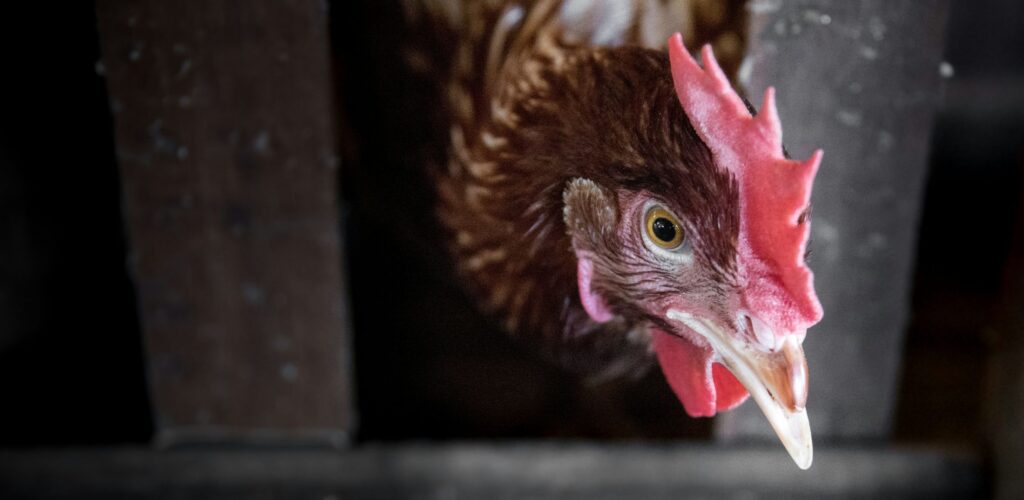
Around the same time, in the 1950s and 1960s, feed companies and hatcheries were consolidating the chicken industry. Most of them would eventually become integrators, owning and managing several stages of the production process. By the mid-1960s, 90% of chickens were raised in vertically integrated operations. This consolidated control enabled the industry to seek every opportunity to become more efficient, responsive, and profitable. They focused on lowering costs and increasing proportions of the highest-desired cuts, mainly breast meat.
A decade or two earlier, in the 1940s, the USDA’s agricultural extension service held a contest for the “chicken of tomorrow.” The winner, the Vantress chicken, would become the standard industry chicken due to the breed’s large breast, fast and efficient growth, consistent size, and gentle disposition. This “perfect” Vantress chicken, combined with advances in antibiotics, enabled the industry to pack thousands of birds into confined spaces with fewer illnesses, significantly increasing production. This lets big meat companies, including Tyson Foods and Pilgrim’s Pride, bring chicken meat to consumers for shockingly low prices. Today, 99.96% of all chickens are raised in factory farms, which can house hundreds of thousands of birds annually.
The Cost of Industrial Chicken Farming
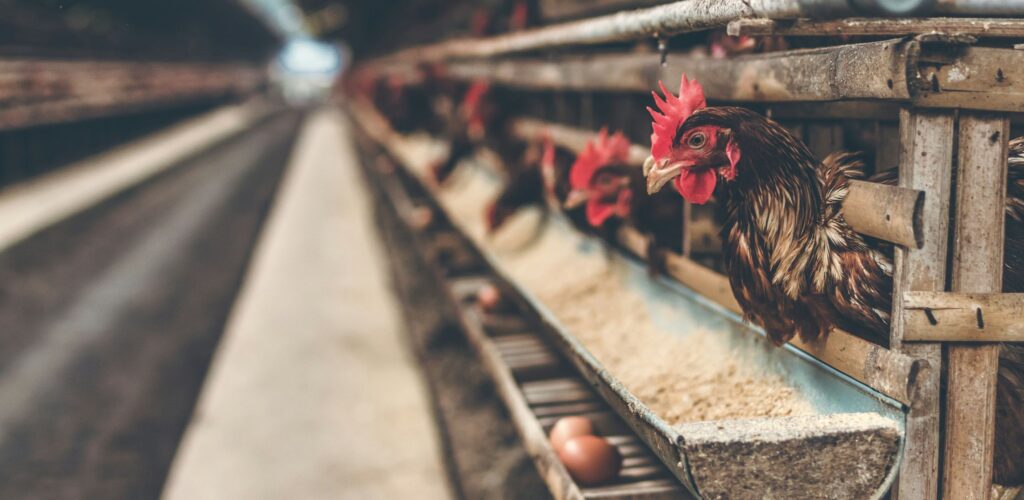
While large meat companies claim that factory farms were built in the name of efficiency and to feed the world, the system comes at a tremendous environmental and human cost. Waste materials from industrial farms, including poultry litter and manure, can contain pesticide residues, microorganisms, pathogens, hormones, metals, and other pollutants, which contaminate air, soil, and water. Factory farming is a resource-intensive process and generates significant amounts of greenhouse gas, worsening heat waves, wildfires, floods, and droughts. Industrial agriculture is responsible for more than 60% of global deforestation, primarily due to clearing land for grazing and growing feed crops.
The cramped quarters of factory farms are breeding grounds for zoonotic diseases, those that can pass from nonhuman animals to humans. To stave off diseases, farmers often give animals antibiotics, but this can ultimately lead to spikes in antimicrobial-resistant superbugs. The CDC estimates that over 60% of known infectious diseases found in humans are zoonotic, and three out of every four new or emerging infectious diseases in humans originated in animals. Additionally, people living near factory farms have an increased chance of uterine cancer death, high levels of antibiotic resistance, and other health problems.
It’s Time for a Change
Industrial animal farming is touted as the only solution to feed the growing population and make food more affordable. But this couldn’t be further from the truth. We currently grow enough food to feed around 10 billion people. But the majority of that food is used as animal feed in factory farms. The real motivation behind factory farming is to line the pockets of big meat corporations at the expense of people, animals, and the planet. We need to shift our system. Transfarmation™ is working directly with farmers to build a better food future. By helping them escape the perils of factory farming and transition their farms, we are demonstrating that moving away from factory farming is profitable, sustainable, and better for all.