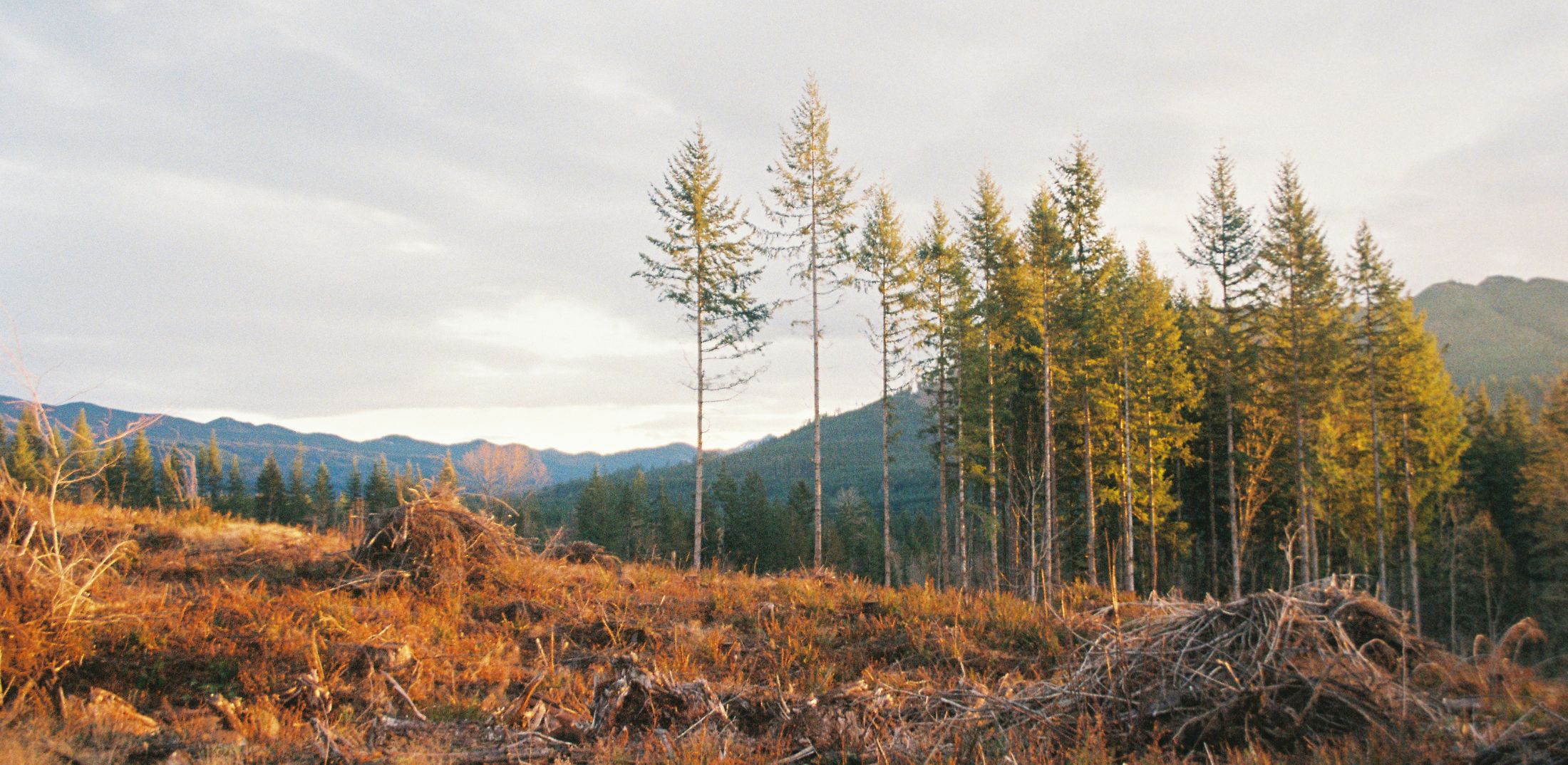
Is the Food on Our Plates Driving Global Deforestation?
Over the past several years, we have become increasingly aware of the impact of our food choices. We have a deeper understanding of how what’s on our plates affects our health and longevity, and more information than ever is available on the links between our food and environmental issues, such as greenhouse gas emissions. But possibly the most shocking statistic of all is that agricultural expansion drives almost 90% of global deforestation.
What Is Deforestation?
Deforestation is the clearing of forested land, removing trees, plants, and animals. Typically, forests are cleared for agriculture and animal grazing, as well as to harvest wood for fuel, manufacturing, and construction. Deforestation has altered landscapes around the world for centuries. About 2,000 years ago, forests covered 80% of Western Europe; today, they occupy just 34%. In North America, from 1600 to the 1870s about half of forested land in the East was cleared. Today, tropical rainforests in South America are being lost at the highest rates.
In the tropics, slash-and-burn agriculture is common. With this method, large areas of forest are burned, and the ash fertilizes the land for crops. But the land is fertile for only a few years, so the process is repeated elsewhere as more and more land is cleared.
How Our Food Choices Impact Deforestation

Between 2015 and 2020, an estimated 10 million hectares of forests were cut down annually. Since 1990, we’ve lost an estimated 420 million hectares of forest. An overwhelming majority of deforestation occurs in the tropics, and agriculture is the main driver. Just three products—beef, palm oil, and soy—are responsible for 60% of tropical deforestation, with beef alone accounting for 41%. Between 2010 and 2014, 2.1 million hectares of tropical forest were cleared each year to create pasture land for raising cattle. Beef-driven deforestation is highest in Brazil, with 72% of the country’s deforestation due to the expansion of pasture lands for cattle. With the demand for beef growing around the world, some scientists fear that deforestation rates will only continue to rise.
While soy production is undoubtedly linked to deforestation, you don’t have to swear off your tofu just yet. Just 7% of all soy grown is used to make soy-based products for human consumption, such as tofu, soy milk, and tempeh. The vast majority of soy is fed to animals for meat and dairy products—a whopping 77%. The rest is used for biofuels, industrial processes, and vegetable oils. Between clear-cutting forests for pasture and growing soy to feed the 1.57 billion cattle raised each year, our obsession with beef is a deforestation nightmare.
The Impacts of Deforestation
Every year we lose forested land at alarming rates, but what is the real impact of deforestation? Trees take in a considerable amount of carbon dioxide from the air for photosynthesis, and the carbon is stored in their trunks, leaves, and branches. Burning trees releases this carbon dioxide back into the atmosphere. Additionally, with fewer trees on Earth, less carbon dioxide is absorbed, leading to the accumulation of greenhouse gases and the acceleration of climate change.
Deforestation also threatens biodiversity. Millions of species occupy the planet, including over 60,000 tree species and 391,000 vascular plant species. Some studies estimate that 80% of terrestrial plants and animals live in our forests. Brazil, the country with the highest rates of deforestation, is home to over 9,000 tree species. When forests are lost, so are the plants and animals inhabiting them. Many scientists believe we are already in the midst of the sixth mass extinction, with unsustainable global land use topping the list of driving factors.
Cattle Ranching on Illegal Land
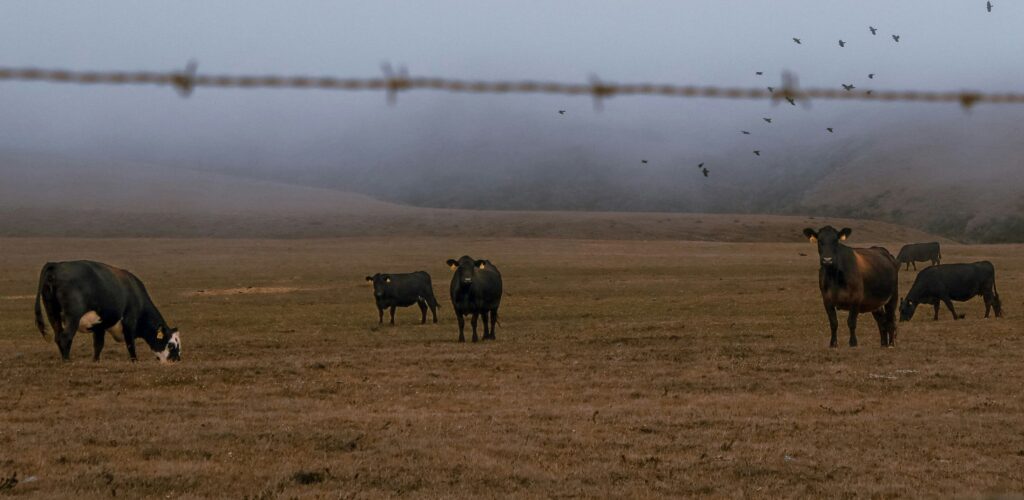
Brazil’s Baixão Verde farm occupies land that was designated as an Indigenous reserve in 2016. Today, 700 hectares of “protected” land in the region are devoid of trees but packed with cattle. The land was hijacked and clear-cut through illegal land grabbing, a prevalent issue in Brazil. The farm shouldn’t exist, and because it’s an illegal farm, the cattle raised there should be barred from entering the international supply chain. Yet nearly 700 cows were transported off the reserve in 2018 to legal farms in the country. Records show that those legal farms sold cattle to 23 slaughterhouses, and the meat was allowed to enter the global market. This means that meat from animals raised on illegally grabbed land is entering supply chains around the world. This is just one example. An investigation found that between 2018 and 2021 more than 90,000 cows raised on illegally grabbed land in the Brazilian state of Pará were transferred to legal farms for export. Two of the facilities were owned by two of the world’s largest meat companies, JBS and Marfrig. JBS and Marfrig are also among the companies that signed a non-deforestation agreement with Brazilian authorities. Therefore, they can be fined and prosecuted for buying cattle from illegally grabbed land. Experts say that meat giants such as JBS and Marfrig simply don’t do enough to ensure that the cattle they buy come from legal farms.
Reducing Deforestation
While all these statistics may cause us to feel hopeless, every person can make a difference. What we choose to consume has the power to hurt the planet or help it. Studies show that by increasing the amount of plants we eat and reducing meat consumption, we could reduce the area of land needed for food production by up to 40%. This land could then be converted back into forests, increasing carbon sequestration and biodiversity.
On a larger scale, we need to work together to fight corporate control in our food system. Those familiar with the global meat market are likely not surprised to see JBS connected to issues in beef production. In fact, just four companies control 80% of the beef industry: JBS, Tyson, Cargill, and National Beef. As industries have become more vertically integrated, these meat giants have gained control over much of the farming process, from seed to shelf. With little competition, they can easily inflate costs to consumers, and with near-unlimited power, they easily avoid penalties for illegal practices, such as exporting beef produced on illegally grabbed land.
Our food systems need an overhaul, and we can all be part of the solution. Corporate control has created a food system that is fragile and unsustainable. But by supporting small-scale local farmers, knowing where our food comes from, and holding Big Ag accountable, we can take steps toward building a more just and resilient food system.