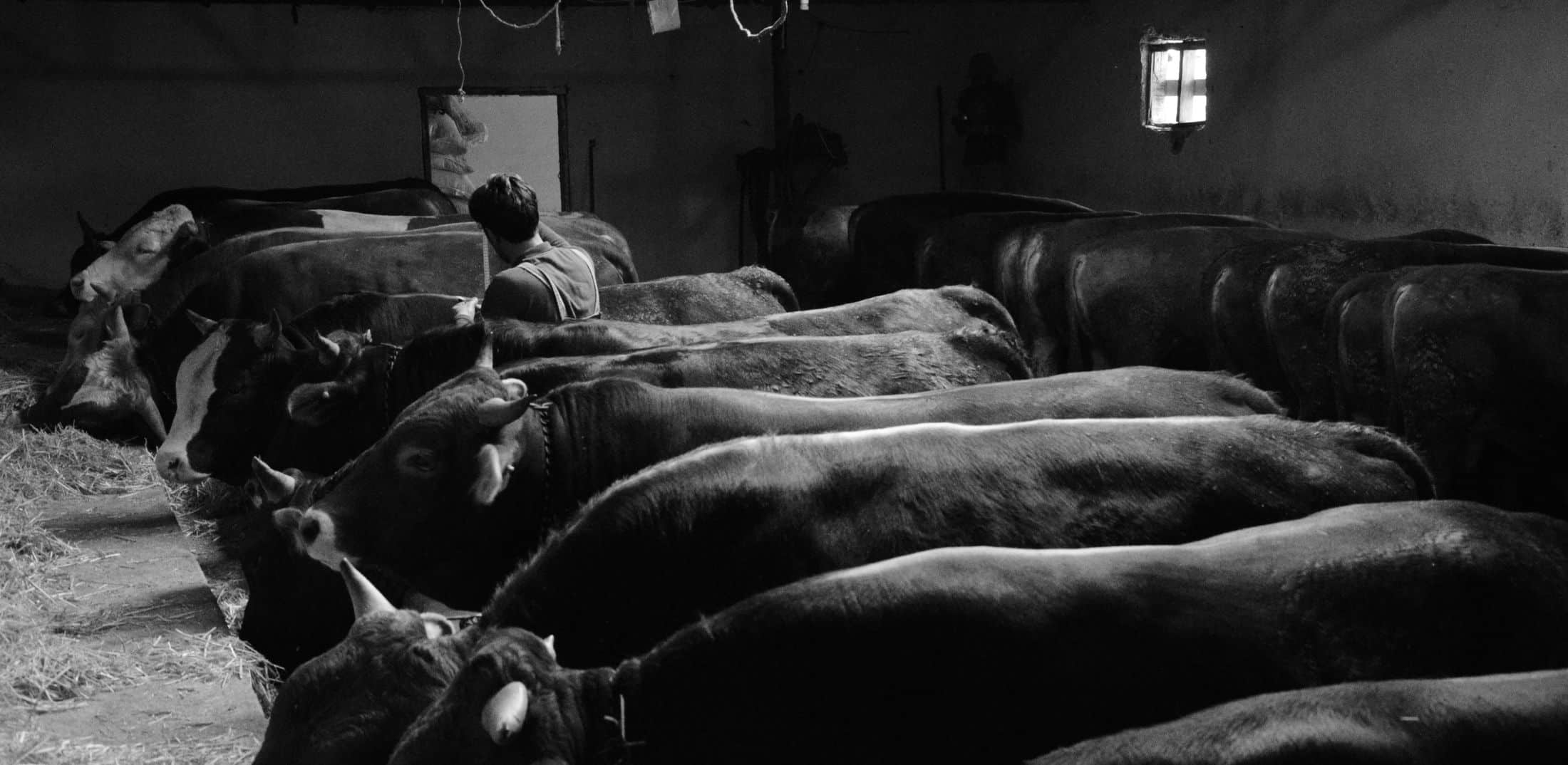
A Legacy of Suffering in Meat-Processing Plants
It’s been almost 120 years since Upton Sinclair’s novel The Jungle was published. If you haven’t read it, the story follows fictional character Jurgis Rudkus, a Lithuanian immigrant who works in meatpacking plants. The novel exposes the harsh reality faced by factory workers: constant wage cuts, production-line speedups, injuries, disease, and instant dismissal and blacklisting for protesting conditions.
Flash-forward to today. In the past couple of months alone, several articles have been published exposing child labor in meat-processing plants, worker protests in Minnesota and Texas, and a push for increased line speeds.
Over a century has passed since these conditions were first exposed. Have we made any progress toward better conditions for workers?
A Labor History
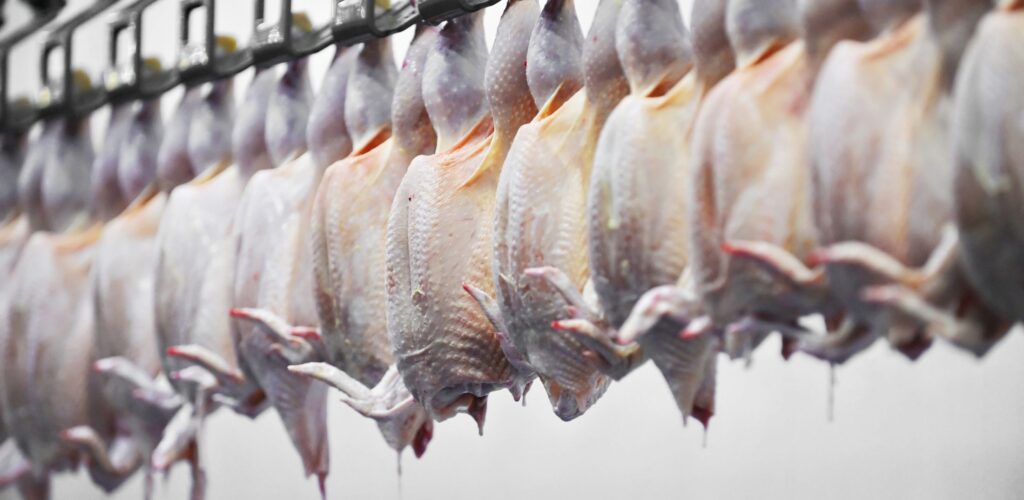
Sinclair’s exposé of worker conditions didn’t throw everyone into an uproar. His portrayal of rats, animal feces, human blood, and body parts making their way onto people’s dinner plates sure did though. In fact, it led to a swift passing of the Pure Food and Drug Act and the Federal Meat Inspection Act of 1906.
Not until the 1930s did factory workers see some momentum. The Congress of Industrial Organizations (CIO) finally passed the National Labor Relations Act in 1935. While industrial organization started in the auto, steel, electrical, and rubber factories, it soon reached the meat-processing industry. Workers formed the United Packinghouse Workers of America (UPWA), to bargain with the meatpacking and processors in control.
From the 1930s through the 1970s, wages and working conditions improved in the meatpacking industry, reaching the standards of the auto, steel, and other industries. The UPWA continued fighting for their workers, and during the 1960s and 1970s, the average wage earned by a meatpacking worker was 14%–18% higher than in other manufacturing sectors.
During the 1980s, everything changed. Meat-processing companies began relocating from cities to rural areas near cattle and hog feedlots. Companies that didn’t relocate shut down their plants and dismissed their workforces. New companies, like Iowa Beef Processors (IBP), became powerhouses in the industry and started automating processes to maximize revenue. This eliminated many skilled-labor jobs, leaving only mindless, repetitive cutting tasks, which the industry refers to as a disassembly-line process. They competed with other companies by increasing worker line speeds and productivity while cutting labor costs. Smaller companies were forced to follow suit or close shop, inevitably bought out by giants like IBP, Tyson, and Smithfield.
These changes enabled the processors to dismiss their longtime organized workers and reopen plants with a nonunion, mostly immigrant workforce. More often than not, facilities were reopened in states where it was difficult for new unions to be formed. Workers were left unable to fight for safer line speeds or wage increases, and those who did seek to organize were met with employer resistance in the form of intimidation.
Producers stepped up line speeds and cut wages to levels below the previous union-negotiated standards. In 1983, meat-processing wages fell below the U.S. manufacturing wage. The decline accelerated from there: 15% lower in 1985, 18% lower in 1990, and 24% lower in 2002. These changes also led to worsening benefits and working conditions. Injuries at meat-processing and packing plants soared above all other manufacturing sectors to twice the national average. Meat-processing and packing was quickly labeled the most dangerous factory job in America.
Child Labor in the Meat Industry
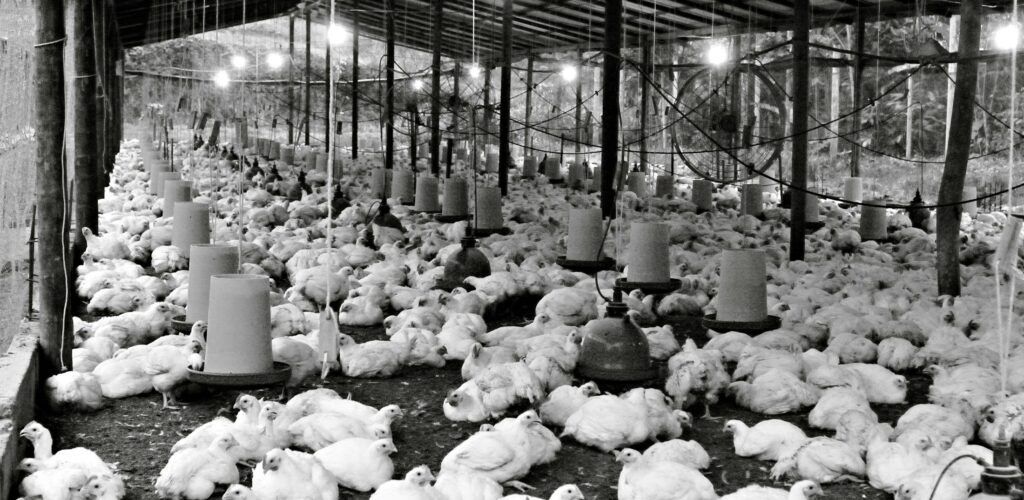
The Fair Labor Standards Act (FLSA) expressly bans employing minors in 17 different hazardous occupations, including slaughter and meatpacking. Despite this, the number of minors employed in these occupations continues to rise. In fact, the number increased 31% between 2019 to 2024.
A 2022 investigation into Packers Sanitation Services Inc. (PSSI), a staffing agency that fills open jobs in the food industry and agricultural industries, found more than 100 children, some as young as 13, working in factories owned by JBS Foods, Tyson Foods Inc., and Cargill Inc. PSSI, which is owned by the Blackstone Group, paid $1.5 million in penalties for the violations. Another investigation by the Department of Labor (DOL) found 11 children working on an Iowa pork plant’s “kill floor” over a four-year span. Earlier this year, Perdue Farms and JBS paid a combined $8 million after the DOL found the companies had relied for years on migrant children to work in their slaughterhouses. The federal child labor fines remain capped at $15,000, despite efforts to raise them.
“We have seen far too many businesses and employers too often getting labor by any means necessary,” said Seema Nanda, the DOL’s chief legal officer. “Our work has focused on the fact that you can’t turn a blind eye to exploitation to get the job done.”
Labor Conditions Today
Today, workers have no power to fight for better working conditions. The meat industry is dominated by giants that are more determined than ever to keep labor costs as low as possible. While the meat industry isn’t threatening to move its plants to other countries, analysts argue that the “third world strategy” is still in play. Instead of exporting production to developing countries for low labor costs; lax health, safety, and environmental enforcement; and vulnerable, exploited workers, U.S. meat companies are simply reproducing those employment conditions in the United States.
Building a Better Future
Like most of the resounding issues in the meat industry, this can be traced to excessive concentration of power. A few companies own the majority of the factory farms, meat-processing plants, and supermarkets. They squeeze out their competitors, killing the competition. This control enables them to dictate the entire sector, from poor working conditions in meat-processing facilities to unfair contracts for farmers. These impacts trickle down to consumers as well, who face fewer choices and higher prices. Together, we can fight back. The public can advocate higher violation fines and support unionization and worker labor protections.
At The Transfarmation Project® we believe people should be prioritized over corporate revenue. That’s why we are working directly with farmers to help transform the industry into one that is just for all.