Beyond the Recall: The True Cost of Industrial Dairy
The level two recall of products from Ohio-based cheese packager and manufacturer Great Lakes Cheese is making big waves. Spanning 31 states, over 45 different brands, and involving only one corporation, this massive failure should serve as a wake-up call for every consumer.
The most immediate concern for the general public is the Class II recall, specifically the alarming discovery of metal shavings in certain of their dairy products. The Food and Drug Administration defines a Class II recall as a product that “may cause temporary or medically reversible adverse health consequences or where the probability of serious adverse health consequences is remote.”
Failures like this introduce dangerous contaminants into the food supply chain, impacting countless households across the nation. The bigger-picture question is: How can a recall from one facility be so far reaching?
The answer is corporate consolidation. When a single company supplies products to a number of major stores under multiple different brands, one misstep can become a crisis of massive proportions. This highlights a fundamental flaw in our food system.
Ischua Creek Tragedy: Great Lakes Cheese’s Toxic Footprint
Great Lakes Cheese’s carelessness does not stop at our plates, it extends directly to our natural environment. The company made local headlines in Western New York when it sought to build a new facility but Charlie Bares of Mallards Farm was uninterested in selling his land for Great Lakes Dairy’s $700 million mega factory. The county’s Industrial Development Authority (IDA) threatened to intervene through eminent domain to force a sale, a power the law grants the government to take private property for public use.
“I say eminent domain is used when the public benefit is overwhelming the private benefit is incidental and this is exactly the opposite really. The only ones that come out ahead are the politicians… We need this good cropland, you know humanity. We should not be paving over our best land in an area. We should not be picking and harming one business to help another business."
—Charlie Bares in Spectrum News
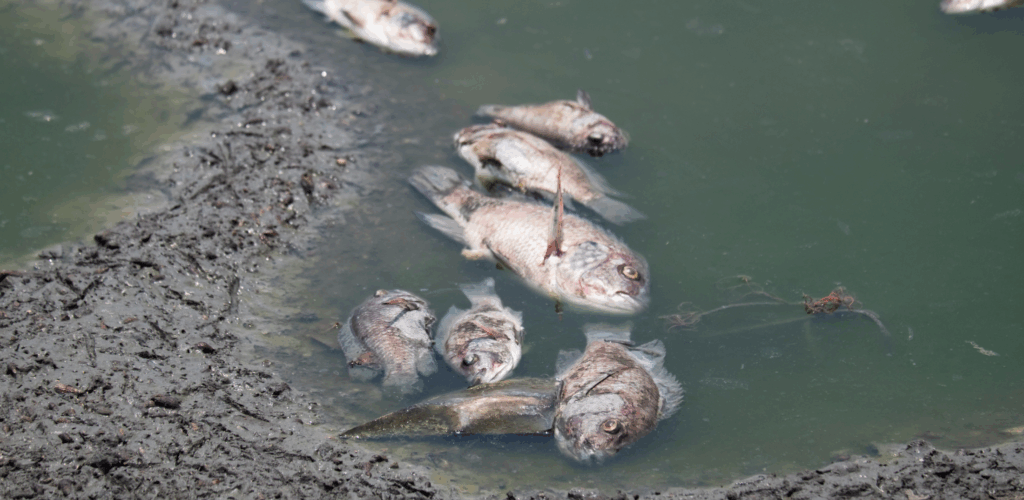
Ultimately, Great Lakes Cheese pursued a new site in nearby Franklinville, New York. The manufacturing plant, which is larger than ten football fields, opened in November 2024. Less than a year later it was slapped with a $475,000 fine and ordered to take corrective actions for discharging pollutants into local Ischua Creek. The result was a devastating fish and wildlife die-off.
EPA records indicate that there were catastrophic infrastructure failures right from the beginning. Great Lakes Cheese violated its discharge permit on the following dates:
- Nov. 30, 2024
- Dec. 31, 2024
- Jan. 31, 2025
- Feb. 28, 2025
- March 31, 2025
- April 30, 2025
- May 31, 2025
- June 30, 2025
- July 31, 2025
A New York State Department of Environmental Conservation investigation also found 18 different violations around the time of the wildlife die-off, including a failure to report plant upsets. These violations, which went on for the better part of a year, culminated in “extensive and chronic” nutrient levels being discharged into Ischua Creek.
This incident is a chilling reminder of the immense environmental footprint left by massive industrial operations. When a business focuses only on maximizing its output, local ecosystems pay the price.
The Ethics of Industrial Dairy
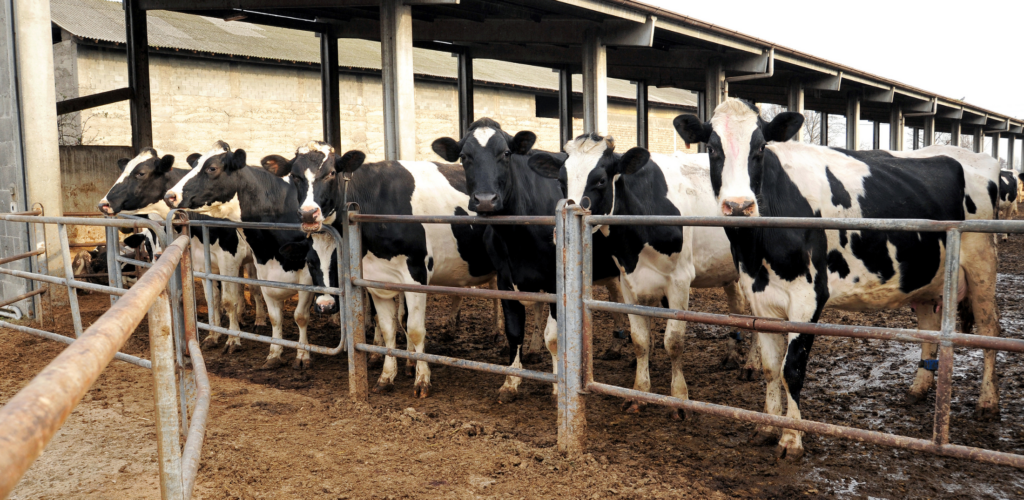
According to the 2022 census, a majority of dairy cows live in herds of 1,000 animals or more. Supplying the Great Lakes Dairy plant in Franklinville, New York requires milk from approximately 60,000 cows per day.
“When we had cows, my husband could tell you whose cow was whose mother, and he knew when a cow was not acting right. When you’re milking [so] many cows, you can’t know that stuff. You know [dairies] can’t be taking care of the animals the way they should when they are that size.”
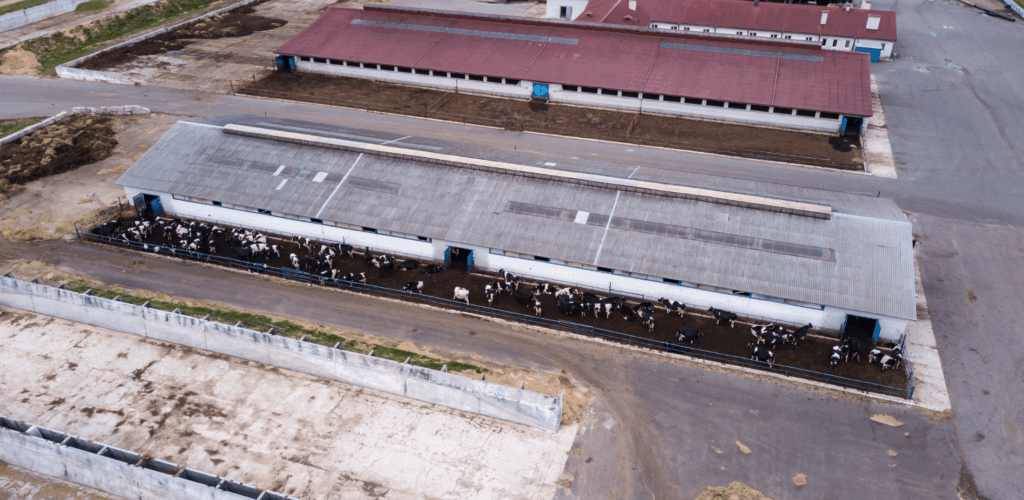
Farms with 700 dairy cows or more are considered Confined Animal Feeding Operations (CAFOs), but they are more commonly known as factory farms. A growing majority of people recognize that farms of this size are a problem. In a 2019 poll, eight out of 10 people surveyed were concerned about related air and water pollution, worker safety, and health problems. Animal welfare is also a consideration, with nearly 80% responding it was an area of concern.
If 60,000 cows must provide milk for daily operations, one has to wonder about conditions on supplying farms. A 2014 Mercy For Animals investigation validates this concern, revealing horrific cruelties at one such farm in Wisconsin.
Great Lakes Cheese's Abandoned Promise
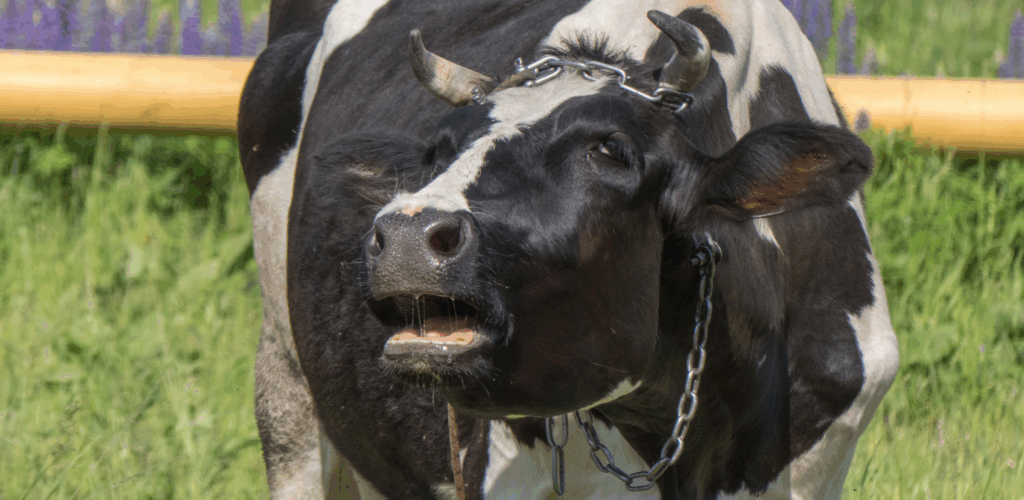
The 2014 Mercy For Animals investigation documented farm staff blasting cows directly in the face with a high-pressure hose, repeatedly kicking and beating the animals, and cutting off their tails with gardening shears.
Though Great Lakes Dairy ceased accepting milk from that Wisconsin farm, many of the actions depicted are common practice at dairy CAFOs. The farm owner investigated by Mercy For Animals defended the cruelty claiming the actions were “blown out of proportion." He further claimed the use of gardening shears to cut off tails "is the most humane way to do it" to prevent workers from being slapped in the face by a soiled tail.
This practice, known as tail docking, is illegal in California, Rhode Island, New Jersey, and Ohio. The American Veterinary Medical Association and the American Association of Bovine Practitioners also oppose the practice.
After severing ties with the farm from the investigation, in 2015, Great Lakes Cheese announced a formal animal welfare policy. It included an end to tail docking, proper veterinary care, and provision of a safe and clean environment for cows. However, that policy is nowhere to be found on their website today.
The data is clear: consumers care about animal welfare. Acts of violence towards animals demonstrate a complete breakdown of ethical responsibility and betray the public’s trust.
Systemic Failure, Systemic Change
The Great Lakes Cheese saga is a clear argument against corporate control of our food system. When a single entity can compromise consumer health and destroy local environments, all in the name of profits, it is time for a systemic change.
As consumers, we have the power to demand better and to move away from a system that repeatedly fails its most basic duties. Choosing food sources that prioritize transparency, sustainability, and ethics is a critical step toward protecting our health, our planet, and the animals caught in this broken cycle. The recall is a warning: we must reform our food system.
At The Transfarmation Project®, we’re proud to not only offer an offramp to farmers looking to escape industrial animal agriculture but also to fight for important food system reform through our advocacy work.
Disclaimer: The images used herein are for illustrative purposes only and do not represent actual photos from or related to Great Lakes Cheese Company.