Big Players, Big Influence: What We Aren’t Told About Our Food System
Who controls our food system? Many theories—even some conspiracies—exist about powerful people dictating what we put on our tables. But the true face of food-system control is a lot more familiar than you may think.
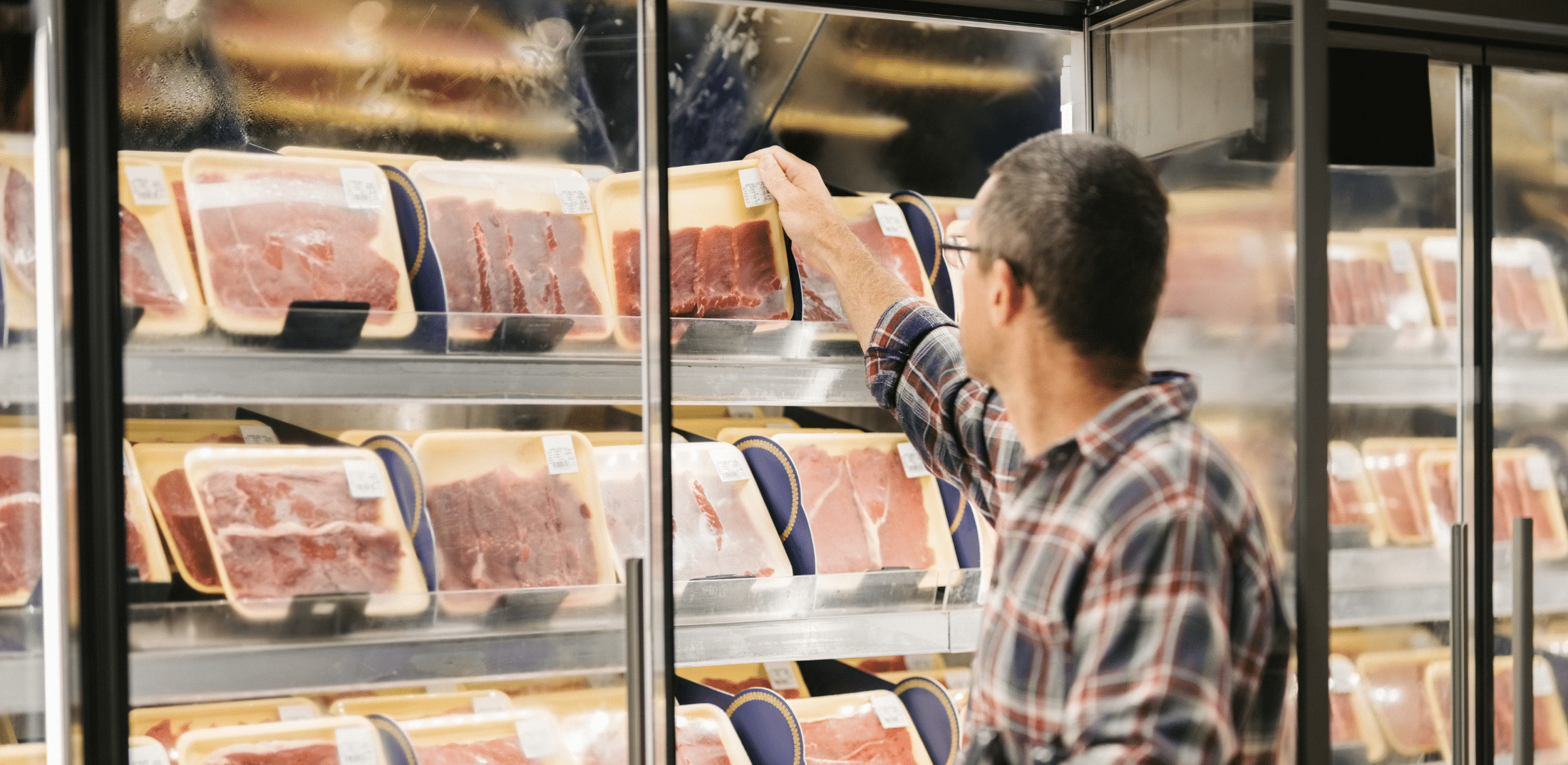
Different logos and brands make consumers feel like they can choose what to feed their families, but in reality, a majority of American dollars go to the same few megacorporations.
It is widely accepted that if just four companies have more than a 40% share of a single market, consumers, farmers, and small companies pay the price. Meatpacking is certainly no exception. Our food system funnels profits to shareholders over farmers and workers, all while limiting consumer choice.
Here’s how the numbers break down:
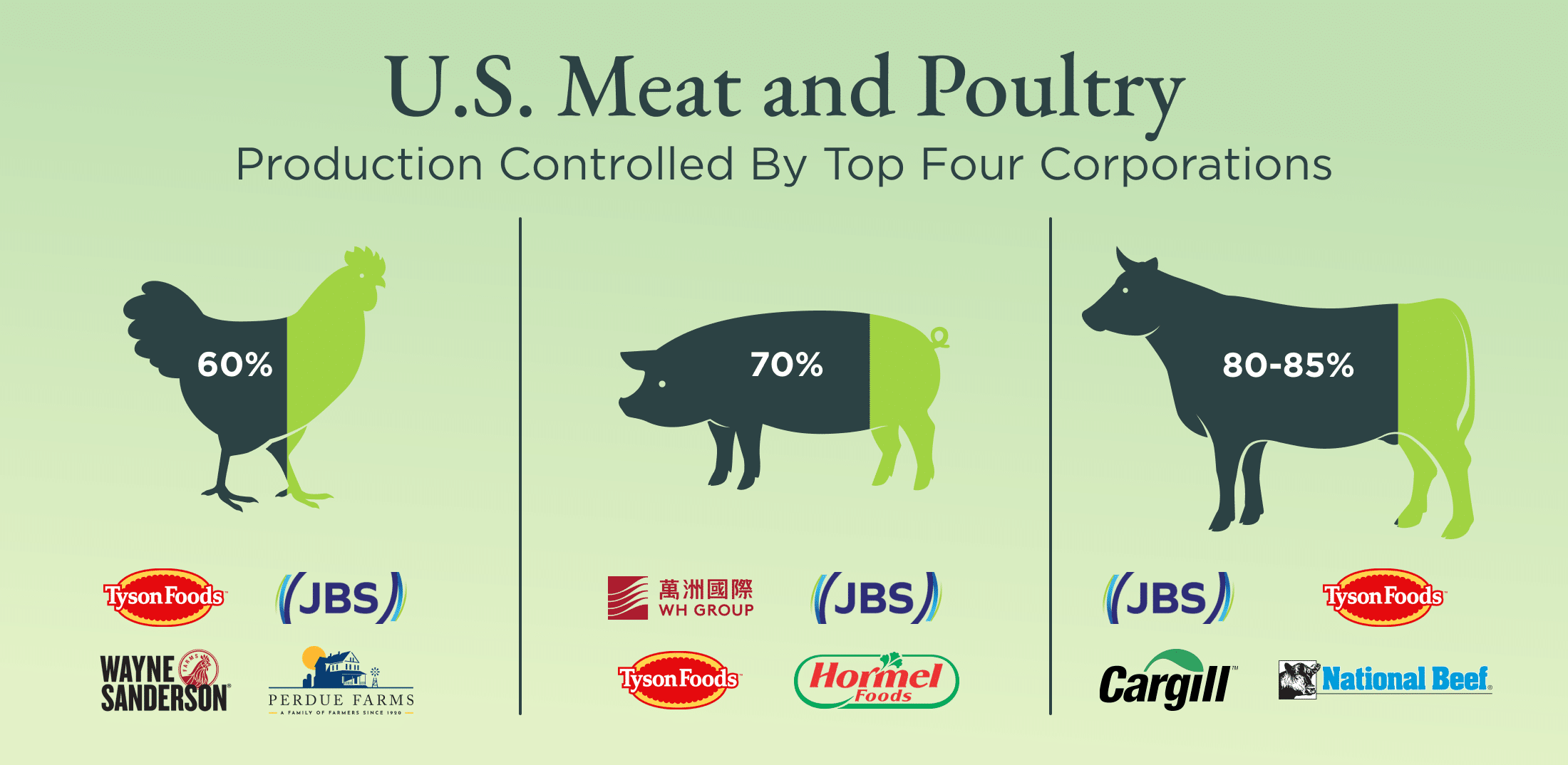
- Just four companies own 80-85% of the beef industry: JBS, Tyson, Cargill, and National Beef.
- Four also control 70% of the pork industry: JBS, Tyson, WH Group, and Hormel.
- And JBS, Tyson, Perdue, and Sanderson control 60% of the chicken industry.
These companies own dozens of brand names all over the world, from Pilgrim’s Pride and Smithfield to Jimmy Dean and more.
Beyond controlling the industry by buying up competitors, these corporations have also consolidated vertically, taking over feed suppliers and genetics firms and controlling packaging and branded-food manufacturing. From seed to shelf, our food system has been mastered.
Consumers want to choose what to feed their families, whether they are driven by an interest in health, brand loyalty, or taste preferences. However, because these same big corporations disguise themselves with different company labels, that freedom of choice is becoming an illusion.
Corporate Control on the Farm
When it comes to farming, corporations keep consumers in the dark. The sprawling green hills, grazing animals and smiling farmers make up the iconography of the past. Modern-day farming looks a lot more unnatural.
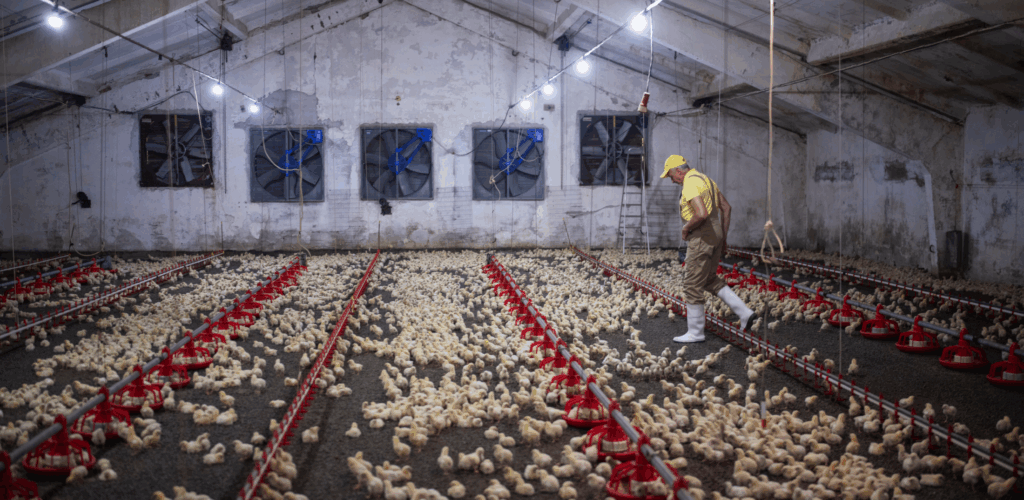
Tens of thousands of birds squeeze into dark sheds, pigs languish in tight-fitting crates, and cows in feedlots are fed a high-fat diet. Animals grow bigger faster with fewer resources. Unlike many small-scale and family farms, factory farming is all about the numbers and many farming families just can’t keep up. This increasing farm consolidation and corporate control are pushing farmers off their land and out of business.
“I don’t think the average person understands where their food comes from. When you tell them the average dairy [farm] has [hundreds to thousands] of cows, they are appalled. When we had cows, my husband could tell you whose cow was whose mother, and he knew when a cow was not acting right. When you’re milking that many cows you can’t know that stuff.”
—Paula Hamilton, Transfarmation Farmer
But the reach of corporate control goes far beyond animal density. Food conglomerates have tightened their grip on every aspect of our food chain. This control strips farmers of their independence. Many farmers in contract relationships claim they feel like “serfs on the land.” Companies dictate the health of the animals, the quality of their feed, the medications they get, and the timing of transport to slaughter. Farmers control only the land, infrastructure, animal waste, and mountains of debt.
“The meat industry is the closest we have to a criminal organization in modern day American business and the USDA just seems incompetent to deal with them. It’s allowing them to keep engaging in these incredibly abusive practices to both our workers and farmers.”
—Austin Frerick, Agriculture Policy Expert and Author of the Book Barons: Money, Power, and the Corruption of America’s Food Industry
Corporate Control in Government
With their deep pockets, corporations also wield significant influence over legislation and politicians. Extensive lobbying efforts and political donations to the tune of millions of dollars allow for significant sway. This makes it nearly impossible for small, independent farmers to survive, let alone keep up.
In the 2024 election cycle, lobbying contributions were at an all-time high with Tyson, JBS, and WH Group making the highest contributions in the meatpacking sector. Many have linked the increase to the Farm Bill, and changes to the 103-year-old Packers and Stockyard Act under the Biden administration, which made agricultural antitrust issues a cornerstone issue.
In November, President Trump announced a Department of Justice investigation into major meatpackers. The inquiry will determine whether they have engaged in antitrust behaviors like price fixing or limiting competition. However, farm advocacy groups like Farm Action have pointed out that we’ve been here before.
A similar investigation launched during Trump’s first term. However, no major actions were taken. Years later, the probe closed quietly mere weeks before the President’s announcement to investigate the same companies anew.
But much more than a partisan issue, the consolidation of our food system is a problem that has seen a number of decades, and numerous political regimes, under both Democratic and Republican control. As long as corporations are still protecting their interests through lobbying and contributions to politicians, we can expect things to remain largely unchanged.
Price-Fixing: Consumers Pay the Price

One of the issues closest home is how corporate power can drive up prices for everyday consumers. Less competition means that the largest meat corporations have a clear pathway to artificially inflate prices. The result is class-action lawsuits and a marketplace where both families and farmers have few real choices.
How do they do it? Advances in modern technology have outpaced laws currently in place. Today’s data-sharing capabilities, for example, have enabled price-fixing collusion. Companies don’t even have to be in the same room to conspire.
Agri Stats, an agricultural data and analysis company, provides a means for this. Big Meat companies—which should be competitors—use it to share data about their costs, output, and prices. Agri Stats standardizes all this proprietary data and distributes it to subscribing companies in a detailed report. Knowing every other company’s plans, prices, and pay enables these companies to restrict meat supply, inflate prices, and decrease producer wages.
Agri Stats estimates that more than 90% of chicken, pork, and turkey producers are subscribers. Technically, such collaboration is illegal. Major companies have paid millions in price-fixing settlements. In 2023, the Department of Justice (DOJ) brought a civil case against Agri Stats for promoting anticompetitive practices through information exchange and violating the Sherman Antitrust Act. As of publication, this case is still pending.
“DOJ’s lawsuit shows that Tyson, Sanderson, Cargill, and JBS have all raised their prices because of Agri Stats. In a recent article, Open Markets Institute highlighted that during the alleged conspiracy, turkey processing margins increased 300% in just three years, Tyson Foods saw its operating margin grow from 1.6% in 2009 to nearly 12% by 2016, and wholesale pork prices rose over 50% in five years after nearly a decade of relative price stability. That money is coming right out of consumers’ pockets.”
—Jessica Cusworth, Angela Huffman, Dee Laninga, Christian Lovell, and Joe Maxwell for Farm Action
Our food system is rigged. It’s easier than ever for corporate giants to increase their profits at the expense of farmers, processing workers, and consumers. Though the DOJ is taking steps to eliminate this unfair practice, change will take time.
Sowing Distrust in Plant-Based Foods
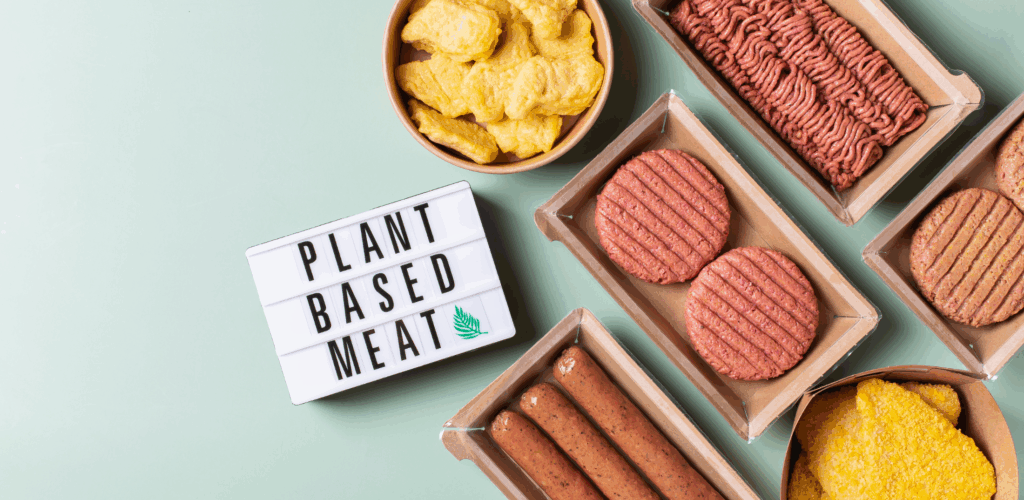
While the law works to break through the bureaucratic red tape, the world is grappling with climate change in real time. Mounting evidence shows a link between meat consumption and harmful emissions that is difficult to ignore. In response, a growing number of scientists, environmentalists, organizations, and politicians are working to shrink our food system’s massive carbon footprint. One solution is plant-based meat.
But Big Meat is challenging this solution. Industry-funded digital campaigns, employment of social media bots, and advertisements downplaying Big Meat’s environmental impacts are part of a movement to sway the public from decreasing consumption of animal products.
One example is the #Yes2Meat campaign, coordinated by the UC Davis CLEAR Center, a communications outlet that feed-industry association IFEEDER funds. The campaign aimed to discredit a well-received scientific report about human diets and sustainability. Analysis of the #Yes2Meat countermovement revealed that it dominated online discussions about the report and sparked conspiracy theories. Responses to the report were 10 times more likely to be negative despite its legitimacy and the respect it initially earned.
Big Meat groups also fund their own research, which can be inherently biased. Companies have the power to choose the questions they wish to explore and withhold funding if the outcome is unfavorable.
Industry groups would have us believe that plant-based meats are unhealthy, a false climate solution, and bad for farmers and food security. But all this effort is just to take our minds off the real problem in our food system—corporate control.
“Farmers’ ire has been misdirected at meat alternatives, which still make up less than 2% of the total market for meat and alternatives. The narrative that the rise of veganism and alternative protein sources is to blame for farmer job losses is becoming increasingly prevalent. The real killer of farming jobs is not falling demand for animal products, but intensification.”
—Charlotte Flores, Political Researcher with Bryant Research
Corporate Control Is the Antithesis of Independence
In the land of the free, how are megacorporations allowed to continue this increasing consolidation? Their power grows as they push small farmers off their land and out of business, creating an ever-narrowing market dominated by a few large players. This not only impacts the variety and quality of food available to consumers but threatens the very fabric of our agricultural heritage.
At The Transfarmation Project®, we believe that farmers deserve more than to be pawns in a corporate game. They deserve autonomy, fair pay, and the ability to build sustainable businesses that nourish their communities. That’s why we work every day to help farmers transition out of industrial animal agriculture and into a more just and resilient future.
We believe that padding the wallets of corporate executives and shareholders at the expense of consumers is unacceptable. The American people deserve a food system that nourishes and allows everyone to thrive. That’s why we strive to strengthen localized food economies and keep food dollars close to home.
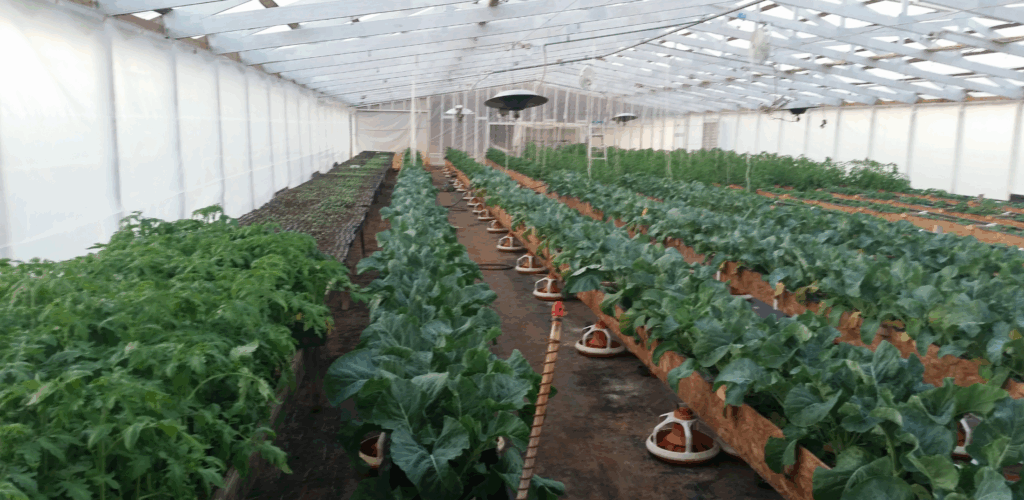
This fight affects everyone. A food system controlled by a few corporations is fragile and unsustainable. But a food system led by independent farmers, growing diverse and sustainable crops—that’s a food system built to last.