What the Cyclospora Outbreak Tells Us About Our Food System
“The bigger the supplier, the greater the opportunity for contamination.”
—Marion Nestle, professor emerita at New York University
We’re noticing something in the wake of the cyclospora outbreak. Such a big surge of illness has people talking and thinking critically about where they’re getting their food. Frankly, this discourse is long overdue. It’s a small silver lining in a sea of unsettling food-related headlines.
Infecting over 2,000 people, this cyclospora outbreak is the largest in history. While many wonder about the source, point fingers, and lament the cuts to food safety programs, Transfarmation has been looking at the bigger picture. Though all those things are certainly important, more people should be talking about market consolidation and how intensive concentration weakens our food safety and security.
This outbreak is indicative of a difficult truth: when our food system is consolidated, with just a few corporations controlling what we eat from seed to shelf, it becomes vulnerable.
Avoiding Cyclospora May Be More Difficult Than You Think
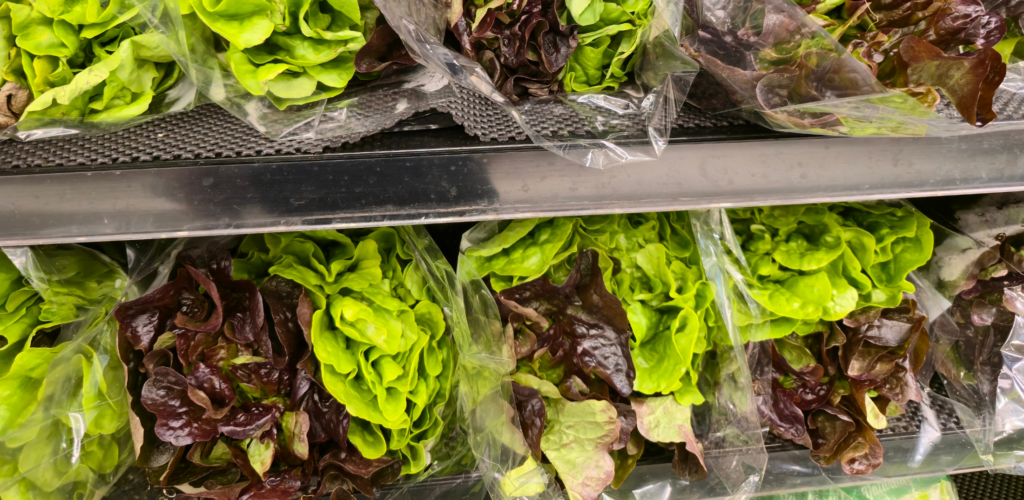
Just four companies own 54% of the entire fresh-cut salad market. Those companies are Cultrale-Safra, Itochu, Bonduelle, and, of course, Taylor Fresh Foods. That means if you’re buying salad from a grocery store, there’s a pretty good chance it came from a farm that supplies these big companies.
If you have never heard of these companies before Cyclospora made headlines, you are certainly not alone. Part of the problem is that these huge corporations supply major grocery stores and restaurant chains all across the country under a number of different labels. That includes Walmart’s Marketside and Kroger’s Private Selection. They also supply fast food restaurants like Chipotle and Taco Bell, so avoiding any one brand is harder than it might seem.
Let’s Zoom Out For A Moment
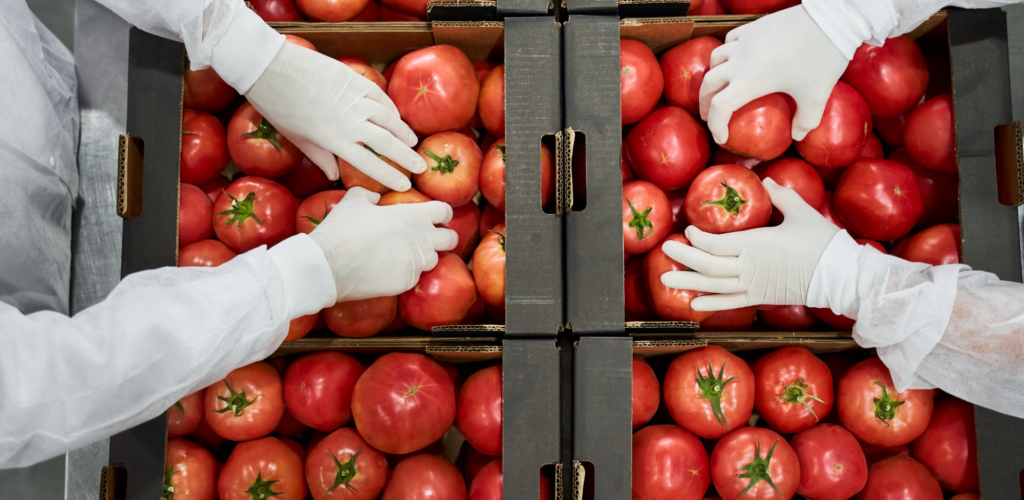
A majority of today’s specialty crop farmers, or farms growing important fruits, vegetables, grains, and legumes for human consumption, are contracted directly through huge companies that handle nearly the entire chain of food production. The companies manage food packing, purchasing, and crop distribution, leaving farmers with very little control over what they grow or how they grow it. These companies are called grower-shipper-packers, or GSPs.
Today, nearly 90% of fresh produce reaches shelves via a GSP. Taylor Farms is just one such company. A mere 20 investor-owned groups control the sector. These are predominantly multinational corporations that source food from all over the world.
This is the result of decades of unchecked consolidation and vertical integration. Farmers and consumers are left to pay the price while corporations continue to gobble up money and power.
Beyond the Salad Bowl: Concentration in Agriculture

In just about every sector of agriculture, markets are at least this concentrated. That means when something goes wrong, it doesn’t take long for enormous ripple effects to seriously disrupt our entire food supply chain.
We’re already seeing it happen. Cyclospora is just one example.
We saw it in the egg industry amidst the Bird Flu outbreak. We saw it in the dairy industry when shredded cheese products were recalled due to metal shavings. This summer, we’re seeing it in fresh produce with cyclospora.
It is widely accepted that if just four companies hold more than 40% of a single market, consumers, farmers, and small companies pay the price. This leaves us with megacorporations that push small farmers off their land and out of business. It creates an ever-narrowing market with limited competition. This not only impacts the variety and quality of food available, but it threatens the very fabric of our agricultural heritage.
The Cyclospora Silver Lining
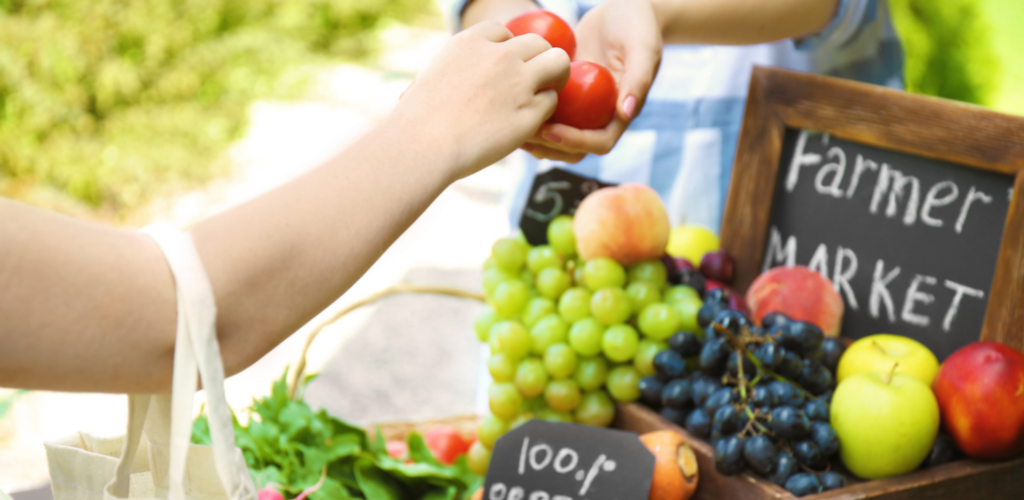
The good news is that a lot more people are starting to care about where their food comes from. Families are flocking to farmers' markets, talking to farmers, and sourcing food from their local communities.
The best part? Farmers are noticing, with some farms even selling out of leafy greens or enforcing limits on how many one family can buy at a time!
A simple fact is that we have power as consumers. We must continue to invest in local and small-scale growers who are stewards of the land. This doesn’t just uplift farmers, but it also keeps that capital in our own neighborhoods instead of lining the pockets of corporate executives who don’t care about food safety as much as they care about their own profits.
This is exactly the food system we’re trying to build. If that sounds like your thing, make sure to support organizations working to make it happen and support your local farmers!