STRIKE! The Beef Between Workers and JBS
Nearly 4,000 JBS workers made history in Colorado by shutting down one of the nation’s largest meatpacking plants. The strike, which began on Monday, March 16, 2026, will last for weeks, according to leaders of the workers' union. They claim ongoing contract negotiations have dragged out since May 2025.
The Greeley, Colorado, strike is the first of its kind in around 40 years. The union says its employees are looking for fair pay, safer working conditions, accurate accounting of line speeds, and protective equipment. “[JBS is] just trying to push that this is an economic strike. That’s not true… It’s a staffing issue, it’s a safety issue, it’s a transparency issue,” said Kim Cordova, president of the plant’s union. She told Mother Jones that this narrative represents JBS’s effort to paint workers as only concerned about money.
To JBS, these concerns may seem purely financial. After all, the corporation is the world’s largest meatpacker. In the trailing 12 months, JBS’s total revenue exceeds $83 billion. According to journalist Marc Sallinger, the difference between what JBS offered and what the union is asking is only about $3 million.
Ultimately, JBS's “skin in the game” seems limited. Recently, the corporation paid $83.5 million in a price-fixing settlement, $200.2 million in a wage-suppression settlement, and another $4 million for illegal child labor. For the other parties involved, it’s a different story. The ripple effects of this shutdown will hit farmers, animals, and communities.
Striking Against Corporate Control
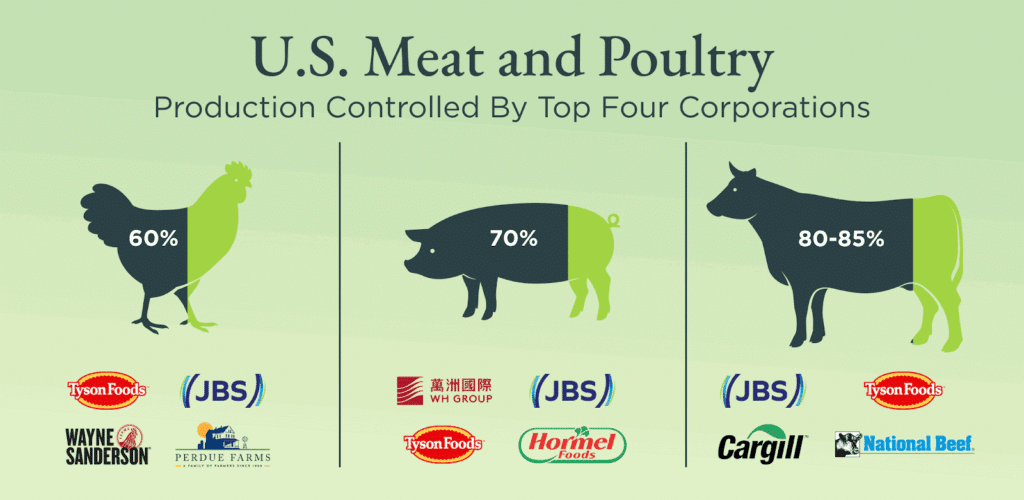
JBS, along with three other companies control about 85% of the entire beef market. But their reach extends far beyond cattle. They are also part of the top four that control 70% of the pork industry and 60% of the poultry industry.
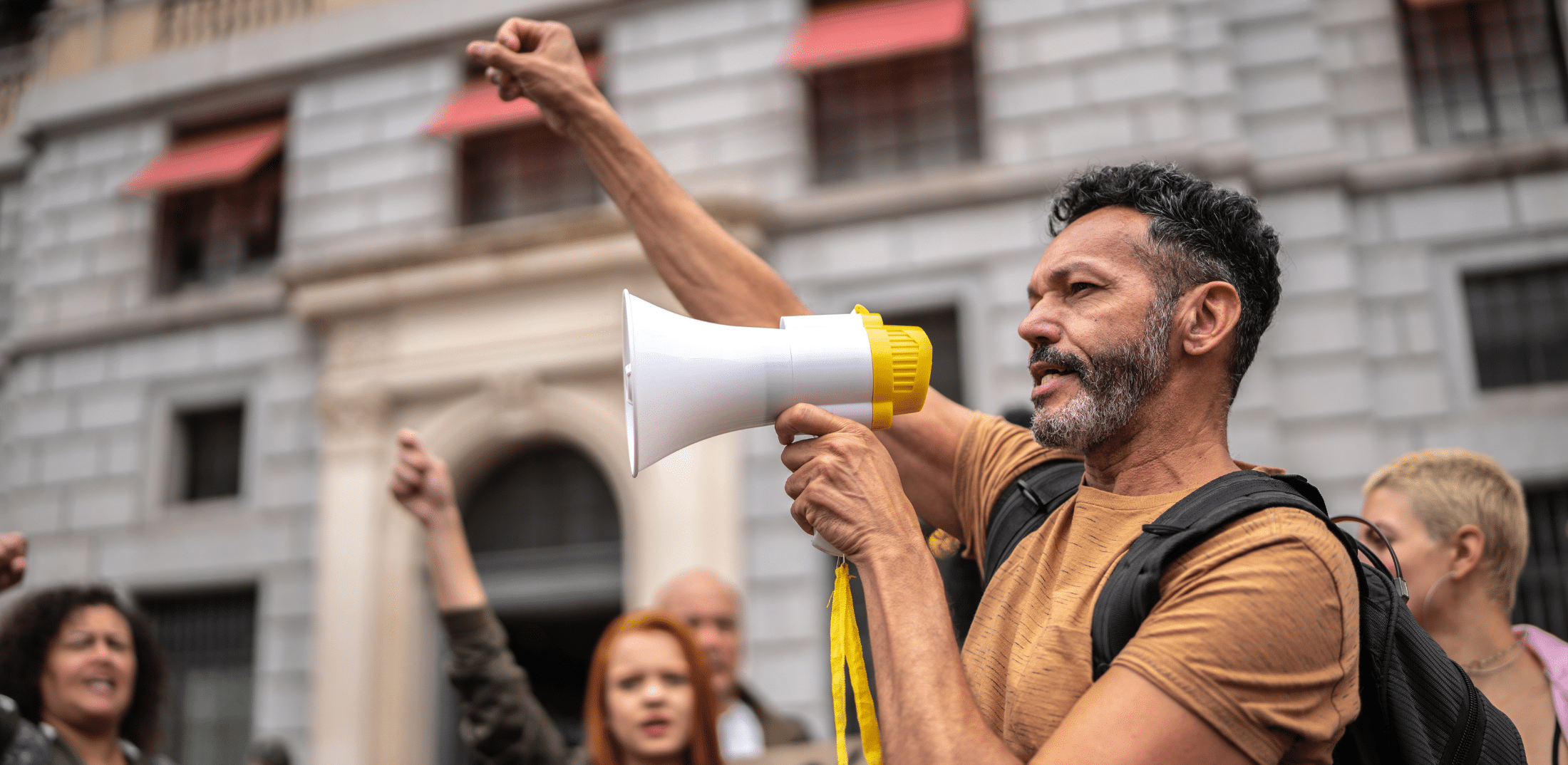
Protestors in Colorado wave signs that read, “Please do not patronize JBS.” Because of the number of brands under JBS's control, a true boycott may be challenging. Among many others, the JBS umbrella covers Pilgrim’s Pride, Swift, Blue Ribbon, Certified Angus Beef, Grass Run Farms, Just Bare, and Thinkpure. As a global company, they also own brands in other countries.
Beyond controlling the industry by buying up competitors, corporations like JBS have also consolidated vertically. Major corporations own feed suppliers, genetics firms, packaging companies, and branded-food manufacturers. This means corporations control our food from seed to shelf. They own the animals, dictate what they’re fed, control the medications they receive, the conditions they’re raised in, how they’re slaughtered, processed, and packaged. This lack of control is often cited as a reason that many farmers who work under contract contact Transfarmation seeking a way out.
On the third day of the strike, the workers’ union held a press conference. Among workers and leaders, a new ally emerged in Mike Callicrate, a rancher and farmer advocate from Kansas. Callicrate criticized the beef industry for “abusive corporate power” regarding farmer pay, 9NEWS reported. “[The industry hasn’t] paid a rancher a living income or what his/her animals are worth for decades. Those same companies are trying to get workers to work for less in terrible working conditions… It’s no wonder we’ve lost half our ranchers,” he said.
“The JBS worker strike is an inevitable result of decades of unchecked corporate control and industry consolidation. Whether it’s a contract farmer trapped in a cycle of debt or a meatpacking worker fighting for a living wage and basic safety, the root cause is the same: a consolidated food system that prioritizes corporate profit over human dignity. The Transfarmation Project works with farmers to take that control back and put it where it belongs: in the hands of the people who feed us.”
—Katherine Jernigan, Director of The Transfarmation Project
Meatpacking workers may be the ones on strike, but stakeholders all across the food system are becoming fed up.
Striking for Fair Working Conditions
Meatpacking is one of the most dangerous jobs in the country. Workers operate heavy machinery and sharp tools at a fast pace. Because the Greeley, Colorado, plant’s workforce is estimated to be 90 percent non-white immigrants, including more than 1,200 Haitian workers, workers can be too afraid to speak up against unsafe working conditions.
“I don’t think the American public has a sense that the food on our table is being produced by immigrant workers under conditions that would make Upton Sinclair turn over in his grave.”
—Peter Rachleff, Author of Hard-Pressed in the Heartland: The Hormel Strike and the Future of the Labor Movement
The same JBS plant is implicated in a class-action lawsuit alleging discrimination, injuries, and unsuitable living conditions. The plant’s union describes JBS’s actions as a potential “trafficking” scheme. The lawsuit claims JBS recruited over 1,000 Haitian workers via TikTok under false promises.
One of the biggest concerns for workers is line speed, according to Robenson Franc, who spoke to Mother Jones in Haitian Creole through an interpreter. The lawsuit claims that the average daytime shift line speed is around 300 head of cattle per hour. At night, the alleged speed is around 370 head and has even reached 440.
JBS claims the worker strike is not about working conditions, having “resolved all non-economic items in bargaining.” Cordova dissents, stating that many of the open items directly correlate with worker safety, such as the provision of protective gear.
Standing Together For a Better Food System
The JBS workers’ strike in Colorado is a clear indicator that our food system is fragile. The ripple effects of this shutdown will hit farmers, animals, and communities.
At The Transfarmation Project®, we believe that farmers and workers deserve more than to be pawns in a corporate game. They deserve autonomy, fair pay, and safety. That’s why advocacy, alongside farm transitions, is an important pillar of our work. Corporations have so much money and power. The only way we can challenge them is by standing together.