
Our Top Five Frightening Farm Facts
These days, our food system is more of a trick than a treat. There’s plenty to be spooked about, whether you’re a farmer, a farm community member, or even just a person trying to eat healthy food.
Here are Transfarmation’s top five frightening farming facts:
1. Most livestock farmers have a negative net income.
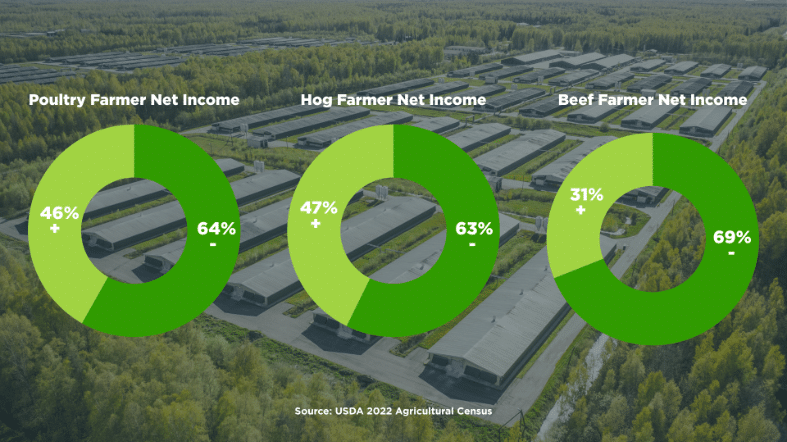
Industrial animal agriculture, or factory farming, is the predominant form of farming in modern society. Experts estimate that in the United States, around 75% of all land-based livestock (including poultry, hogs, and beef cattle) come from concentrated animal feeding operations, or CAFOs. According to the 2022 Agricultural Census, most of those farmers don’t actually make a profit. This is due to a number of factors, including high operating costs, heavy debt loads, and low farmer pay. This is particularly true in contract farming. Mega-corporations offload the financial risk and infrastructure of farming onto the farmers while raking in billions of dollars in profit.
2. Consumers’ freedom of food choice is becoming an illusion.
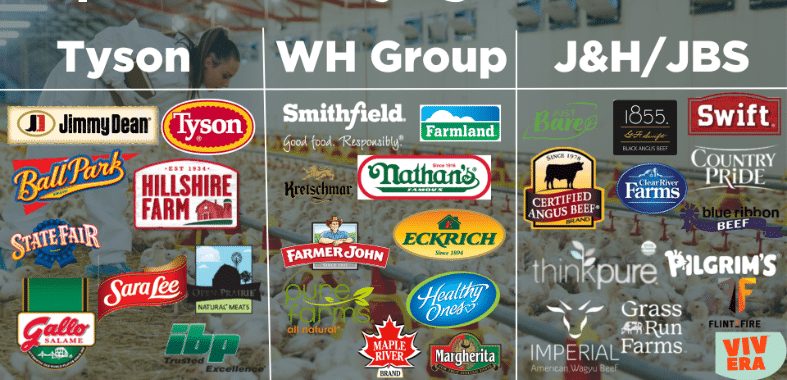
Consumers want to choose what to feed their families, whether driven by health interests, brand loyalty, or taste preferences. However, because these same big corporations disguise themselves with different company labels, that freedom of choice is becoming an illusion. Additionally, considering most food expenditures (about 59%) in the United States occur outside the home, it’s even harder for the average consumer to avoid supporting these brands. Whether food comes from a cafeteria, restaurant, or chain, consumer choice is severely limited.
3. The top four companies own a majority of the industries.
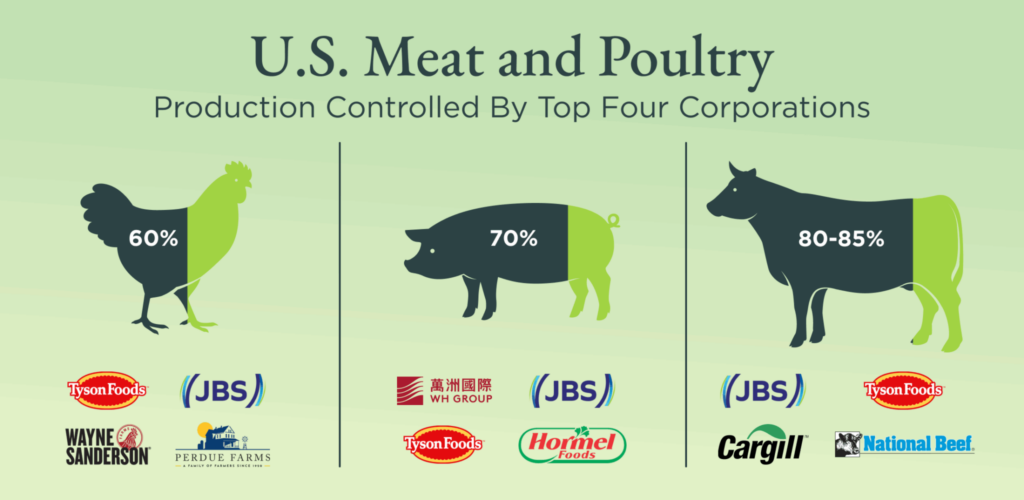
It is widely accepted that if just four companies hold more than 40% of a single market, consumers, farmers, and small companies pay the price. Meatpacking is certainly no exception. Our food system funnels profits to shareholders over farmers and workers, all while limiting consumer choice. Beyond controlling the industry by buying up competitors, these corporations have also consolidated vertically, taking over feed suppliers and genetics firms and controlling packaging and branded-food manufacturing.
4. Farming is becoming increasingly concentrated.
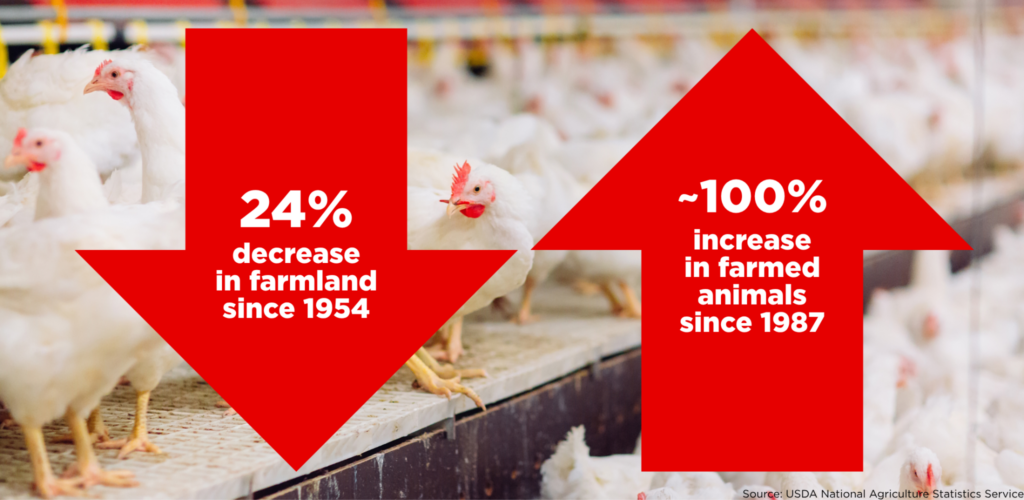
We’re raising more animals on less land. While this may sound like a win for efficiency, it comes at a very high cost. For one, small-scale and independent farmers are struggling to survive in an industry that doesn’t prioritize them. Additionally, areas such as animal welfare, environmental stewardship, and land management are deprioritized. The result is a food system in which animals suffer unnecessarily, water is polluted, and neighboring residents experience significant health issues. For example, Iowa is the nation’s largest factory-farming state. It is also the state with one of the highest rates of new cancer cases.
5. Big Ag giants accused of fixing prices pay only a pittance.
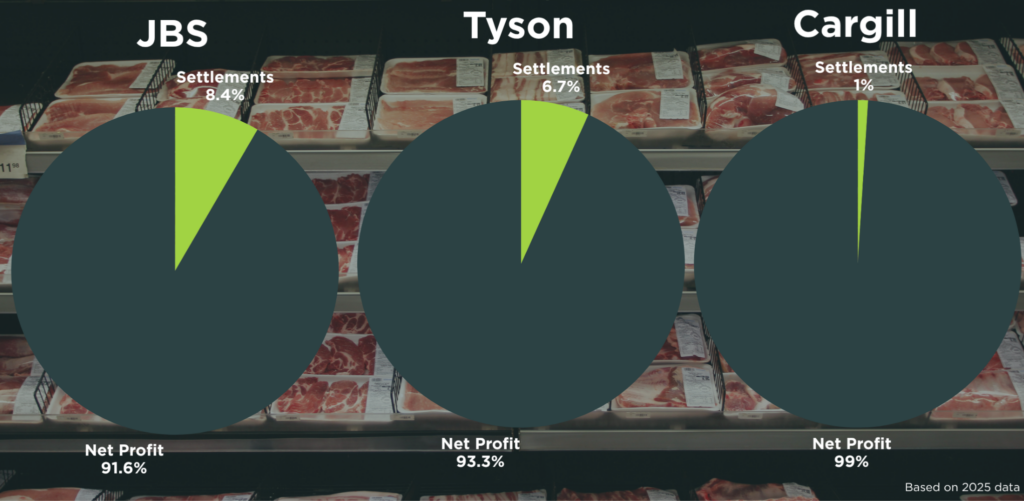
Consumers are facing soaring food prices, and the dominant players in our food system are making record profits. In recent years, big companies like Tyson, JBS, and Cargill have paid hundreds of millions of dollars in legal settlements related to price- and wage-fixing. But considering the power they have over our food system, these settlements are mere drops in the proverbial bucket, especially when compared to their net profits. As long as settlements continue to make only a small dent, companies will have little incentive to change their practices.
Feeling thoroughly spooked?
You’re not alone! Our food system is frightening enough to keep us up at night. That’s why The Transfarmation Project is working directly with farmers to build something better. Through farm transitions, advocacy, policy work, research, and more, we know something more just and sustainable is just on the horizon.